
Seattle: Lynwood Link Light Rail Extension
Sound Transit (officially the Central Puget Sound Regional Transit Authority) was created in 1993 by King, Pierce and Snohomish counties to build a regional rapid transit system. It serves the Seattle metropolitan area, providing light rail services in Seattle and Tacoma as well as express bus services and a commuter rail line.
With tax increases approved by voters in 1996, 2008 and 2016, the agency is undertaking the most ambitious transit expansion in the country, with new service opening every few years. Its Link Light Rail system now has two lines that are 24.5 miles long. Over the next two decades, this is expected grow to five lines with 116 miles.
Despite Sound Transit’s numerous transit offerings, the agency currently has fewer than 1,200 full-time employees because it does not operate most of its own services. For example, it has contracted with King County (the region’s largest transit operator) to operate the Link Light Rail service in Seattle.
Sound Transit currently has four expansion projects under construction including the Lynnwood Link Extension. This project extends light rail from Northgate in Seattle to Lynnwood in neighboring Snohomish County. The 8.5-mile-long project includes three new stations and is expected to open in 2024.
The typical schedule for one of Sound Transit’s projects is: planning (4 to 5 years), final design (2 to 3 years), construction (5 or more years), testing and pre-operations (6 months to a year).
Table of Contents
Organization
 The Design, Engineering & Construction Management Department leads the design and construction efforts for Sound Transit’s expansion projects. It has the following three divisions:
- Capital Project Management Division ensures projects’ performance including scope, budget, schedule, risk, safety, security, and quality for the final design, construction, start-up/testing and rail activation phases.
- Business and Construction Service Division oversees permitting, real estate, and construction management services.
- Design and Engineering Division oversees policies, standards and strategies, including updates to the agency’s procedures manual.
Because the agency’s focus is on delivering multiple expansion projects, rather than directly operating services, many project management functions and controls are centralized. Likewise, all its departments have extensive experience related to constructing large projects. These departments include Safety and Quality Assurance; Procurement and Contracts; Legal; Planning, Environment, and Project Development; and Finance and Information Technology.
Two other departments also perform critical roles. The Operations Department ensures that construction complies with the agency’s plans and procedures, and coordinates with Sound Transit’s operating partners. The Executive Department provides human resources, communications, government relations, and other functions.
Susan Fletcher and FTA’s Regional Office
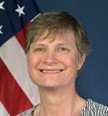 Susan Fletcher was appointed regional administrator of FTA’s Seattle office in 2023. She has a long history of working with Sound Transit since she previously served as deputy regional administrator, director of the office of operations and program management, and regional engineer.
Fletcher said, “Sound Transit had some ‘troubles’ during its initial startup, but they always asked, ‘what are we doing wrong, and how can we do it better?’ When we gave them the names of other people who had similar issues, Sound Transit always ran with it and pulled in practices from other agencies.”
Fletcher said providing technical support is one of the benefits that FTA provides to grantees. “We make connections between people, telling them what we’re seeing, how to avoid problems, and how to slow down the bleeding.” She said that it is important for the FTA “to build collaborative relationships” with its grantees so that the agencies are more receptive to the FTA’s suggestions.
Fletcher tells transit agencies, “We’re not successful, if you’re not successful. The FTA can look at the big picture and help you see how things are going. We can pull your heads out of the weeds and provide you with a free independent review.” She did admit that the “FTA could do a better job sharing experiences from the around the country.”
When Sound Transit started ramping up, the FTA warned the agency that it would be difficult to get quality people and emphasized the importance of training staff, defining responsibilities, and setting up procedures ahead of time. She said, “Particularly on really large projects, when people haven’t done them before they don’t know what it’s going to take. It’s like having your first kid. You don’t know until you get there.”
She also emphasized the importance of identifying lessons learned as a project goes along, although she understands some agencies are hesitant to document these lessons because they could be used as evidence in a claim against the agency. Fletcher said Sound Transit documents their lessons in a way that is not discoverable, so that it cannot be used against them.
The FTA’s regional office in Seattle has staff with general skills who oversee projects, but when the FTA headquarters hires Project Management Oversight Contractors (PMOC) to help the regional offices, they draw from a deep bench of specialists who have specific expertise in areas such as cost estimating, project controls, revenue service. The PMOCs are usually not based in the region, but rather fly in periodically.
Project Team
This document refers to the following Sound Transit staff.
- Ron Lewis, Executive Director of Design, Engineering and Construction Management
- Randy Harlow, Executive Project Director for the construction phase of the Lynnwood Link Extension (in Lewis’s department)
- Linneth Riley-Hall, Executive Project Director for Federal Way Link Extension (in Lewis’s department)
- Leslie Powers, Deputy Executive Director of Talent Acquisition and Rewards
- Tito Harris, Director of Learning and Development.
- Peter Rogoff, Chief Executive Officer from 2016 to 2022
Project Team: Descriptions
 Ron Lewis (Department’s executive director)
Ron Lewis heads the Design, Engineering and Construction Management Department, reporting to the deputy chief executive officer.
He has a bachelor’s degree in urban planning, and a master’s in transportation planning and engineering. After graduation, he was a planner and project manager with the city of Seattle, King County Metro, and Parsons Brinckerhoff. Since joining Sound Transit in 2002, he has had numerous roles including project director for the Airport Link and executive project director for the East Link Extension.
Lewis leads a department that includes project directors (such as Randy Harlow and Linneth Riley-Hall), engineers, architects, construction managers and other professional staff responsible for the design and construction of the light rail program.
His responsibilities on the Lynnwood Link project include the following:
- Direct the development and implementation of project delivery processes, practices and strategies. • Ensure project execution is in accordance with policies, plans and procedures.
- Commit resources and provide contracting authority for consultants and contractors.
- Approve contract change orders, third party agreements, and claim settlements.
- Negotiate agreements with third parties.
- Interface with consultant and contractor executives to ensure responsiveness and contract compliance.
When Peter Rogoff was the CEO, he referred to Lewis’s exemplary leadership skills and ability to master complex projects. In 2023, Rogoff said, “Ron is a rock star and he’s still struggling to steer the tanker in a slightly different direction.” He referred to Lewis as “thoughtful” and said, “we need more Ron Lewis’s of the world who can think about the big picture and keep people from freaking out over bad situations.”
Lewis refers to the “what, who, and how” of delivering projects. Sound Transit’s board of directors adopts a scope of work that determines what will be built. The organizational chart identifies who will build it and the project management plan (PMP) explains how it will be built.
Each project director, he said, is responsible for preparing and periodically updating the PMP, which identifies all the roles and responsibilities associated with a project. The project director and team members are expected to be familiar with its contents, and revisit it periodically. Lewis noted the critical importance of keep the organizational chart up to date. He said Sound Transit uses the PMP to demonstrate how a project has the expertise and “adequate bench strength” that FTA expects to see in key positions.
When Sound Transit started its building program, Lewis said the Seattle area did not have much expertise locally, “So, we had to import it.” He credits two former Sound Transit officials, Ahmad Fazel and Joannie Earle, for setting up the organization and instilling a strong culture.
Lewis said, “We put lots of responsibility on the project directors and I expect their teams to be pretty self-sufficient, with support from other divisions. I can’t emphasize enough the need to get the right people.” He explained how the directors need to manage scope, schedule, and budget all together because a change in one affects the others.
Project directors are supported by the agency’s executives, their peers, and support staff. Every other week, Lewis meets with his direct reports and project directors where he passes on relevant information from the FTA and the chief operating officer. “They also share with each other,” he said, “and that’s just as critical because we are building four large light rail extensions at the same time. Usually what one project just did, another is facing. Learning in real time helps us. It’s really important.”
Lewis said that peer-to-peer sharing of information within the industry is also important, but admitted, “we don’t do it enough because there’s not enough time.” In recent years, though, they are doing it somewhat more because of virtual communication opportunities.
When talking about sharing information, he said something that the FTA would probably appreciate hearing more often from its grantees: “Our team constantly asks the FTA and PMOC for advice on who we can talk to.”
See the “Project Management Play and Organizational Chart” in the section below.
As Ron Lewis noted, the PMP provides detailed information about all the project’s phases. For example, it explains how Sound Transit determined the design and construction delivery methods (e.g., design-build, design-bid-build) and how it evaluated numerous options for packaging contracts into bundles.
 Randy Harlow (executive project director)
Randy Harlow is the executive project director for the construction phase of the Lynnwood Link project. He reports to the deputy executive director who reports to Ron Lewis.
Harlow has a bachelor’s degree in civil and environmental engineering, and coursework toward a master’s in construction management. After graduating college, he worked as an engineer at consulting and construction firms where he served as a resident engineer on five different Sound Transit light rail projects.
Ron Lewis was familiar with Harlow’s work and asked him to join Sound Transit. Lewis said, “Randy’s a consummate project delivery guy.” He pointed out that Harlow had valuable skills from his work as a resident engineer and running his own company. Lewis said, “His bedside manner is outstanding. He has outstanding communication skills, not what you’d expect engineers to have based on stereotypes.”
In 2019, Sound Transit hired Harlow to serve as deputy project director for the construction phase of the Lynnwood Link project. The next year, he was appointed executive project director. “It’s a fun job, the biggest one I’ve been on,” he said. Harlow appreciates his autonomy. “I make decisions every day,” he said.
Harlow directs all aspects of project delivery for the project. As described in the Project Management Plan, his responsibilities as executive project director including the following:
- Ensure project is designed and constructed to meet all requirements, commitments, and permit conditions.
- Participate in negotiations of general contractor / construction manager contracts.
- Lead design and construction reviews.
- Develop, monitor, and report on scope, schedule and budget status.
- Determine priorities and direct resolution of project delivery issues.
- Direct key staff and coordinate agency resources.
- Oversee development of project management and other project related plans and progress reports.
- Interface with third parties, the Sound Transit Board and committees, the Citizen Oversight Panel, citizens, community groups, oversight agencies, 108 and other external stakeholders.
- Oversee development of third-party agreements.
- Ensure successful transition of capital assets through all project phases.
Harlow talked about the different ways that project managers and construction managers work with their contractors. He said his strategy tends to be on the “partnership side” while some of his counterparts have operated like the “contractor is looking to maximize profit at the expense of the owner.” He has noticed how managers vary in how willing they are to take suggestions from contractors.
Firms that try to take advantage of clients can face repercussions. He explained, “Some foxes understand they won’t get into any other henhouse, if they chew on all the chickens.”
Other team members
Harlow has fewer than 10 full-time employees who report directly to him, but about 600 when counting employees who are matrixed into his project, contractors, and consultants. These include:
- Deputy Project Director (assists in project management and administration)
- Deputy Project Director for Construction (assists in project management and administration of the construction phase)
- Project Development Manager (builds and maintains relationships with project stakeholders)
- Project Managers (negotiate and maintain agreements with local governments and government agencies)
- Corridor Design Managers (coordinate engineering, design, and design services during construction)
- Principal Architect (oversees architectural, urban design, landscaping design elements)
- Principal Construction Manager (oversees and administers construction) and construction managers)
- Civil/Systems Coordinator (oversees pre-revenue systems and integration testing.
- Corridor Project Control Manager (coordinates project control functions)
- Senior Real Property Agent (directs the acquisition / disposition of property and easements.
- Lead Utilities Engineer (coordinates utility relocations and services with design consultants and utility companies)
Sound Transit also has retained firms to provide design service, construction management services, and construction.
 Linneth Riley-Hall and Federal Way project
Linneth Riley-Hall is not working on the Lynnwood project. She is the executive project director for a different project, the Federal Way Link Extension which is connecting the cities of SeaTac and Federal Way.
Linneth Riley-Hall has a bachelor’s degree in accounting and business management, as well as an MBA. Since she started at the agency in 2010, she has had numerous roles including director of design and construction contacts, and deputy chief of staff. In 2017, she became deputy project director for the Federal Way project and was then promoted to program director and finally to executive project director.
She noted that going forward, Sound Transit will try to hire executive project directors while a project is in the planning stage, so they can oversee a project from beginning to end. When asked whether this is a good idea since a project might not make it to construction, she responded that as far as she knows, none of the agency’s projects had ever completely died in the planning phase.
Ron Lewis praised Riley-Hall’s leadership skills and how she invested in herself by serving on boards of organizations to fast track her construction knowledge. Her role as deputy was also very valuable for her, he said.
 Peter Rogoff
Peter Rogoff was Sound Transit’s chief executive officer between 2016 and 2022. Previously, he served as FTA Administrator for nearly five years and U.S. DOT Under Secretary of Transportation for two years. Project management issues, he said, are a critical need in the transit industry.
He described some of the challenges that project managers face.
There’s a risk and reward of rising to the project management level. The quality of life isn’t that great, and you spend so much time putting out fires. Project managers try to make a challenging situation look better for everyone involved. Not just to the CEO, the board and elected officials. But, also they have to make it look better for everyone below them. You have to be a flag waving cheerleader. Most people below and above don’t appreciate that. You have to be driven.
With both sarcasm and relevancy, he referred to the six phases of a project that have been used to describe the common pitfalls and frustrations associated with large projects: (1) enthusiasm, (2) disillusionment, (3) panic, (4) search for the guilty, (5) punish the innocent, and (6) reward the uninvolved. Regarding that sixth phase, he said, “Project managers do all the work, and others get the glory. It’s just hard. You spend years of your life just so that you can drive by and say, ‘Grandpa built it.’ There’s not much kudos and recognition.”
Rogoff said the head of a transit agency has a much more prominent and public role, and they tend to get more public accolades and greater credit when projects are completed. Rogoff said that can be very rewarding for the kind of people who value being on the evening news.
He discussed some of the challenges that project managers face in both the public and private sectors. “When you’re working for a contractor, it’s like being in the military, having to move every few years.” Rogoff remembered a conversation between a contractor’s project manager and his counterpart at a transit agency. The contractor said to the agency employee, “I can never do your job. There’s too much grief from people who don’t know what they’re talking about.” The agency official responded by saying, “I couldn’t do your construction manager’s job. There’s too much grief from corporate headquarters and dealing with subcontractors.” Rogoff remarked, “It’s always greener on the other side.”
As the FTA Administrator, Rogoff worked with transit systems all across the country. He noticed that some of the FTA’s grantees “didn’t know what they don’t know.” This was especially problematic when a city’s mayor would seek FTA funds directly, rather than having their local transit agency (which the mayor couldn’t control) act as the sponsor. Rogoff remembers instances of cities not understanding the traffic impacts associated with installing rail lines and not recognizing the importance of providing traffic signal preemption. Ignorance sometime led a city to withdraw its application and what he described as the “more frightening scenario of a poorly designed, poorly executed project.”
Rogoff remembered a challenge he faced at Sound Transit trying to ramp up the organization: “After the 2016 ballot measure passed, we were hiring people so fast to spool up for what we promised. Three years later, I was already a veteran. We plucked people from DART, Washington State DOT, the Port of Seattle, Portland, and other municipal agencies. It only worked so well.”
Employee surveys revealed some dissatisfaction with the workplace as a result of this rapid growth. One problem was succession planning. Rogoff wanted managers to identify a list of five people who could take their job. But because the organization was so thinly staffed, it was hard for them to do so. That led to some issues regarding employee leave. He added, “It’s not that I didn’t want someone to go on vacation, I just wanted to make sure when someone was on vacation, we could continue to function.”
Organization Chart – Lynwood Link

Attributes, Skills, and Experience of a Good Project Manager
FTA’s Fletcher and Sound Transit’s Lewis, Harlow, Riley-Hall, and Rogoff identified the key attributes, skills, and experience that project managers need. Note that the term “project manager” is used as a generic term here for the role that the executive project director performs at Sound Transit.
Susan Fletcher emphasized that a project manager does not need to be an engineer or know how to read every drawing. “It takes so much more than being an engineer,” she said. The two most important assets are strong communications and leadership skills. She noted, “it is rare that any of us have that out of school. It is important to have the right mentorship and culture to foster those skills.”
Ron Lewis said he looks for a combination of technical and political awareness, and budget consciousness. Political savviness, he says, requires knowing “where the winds are blowing.”
Randy Harlow identified three important traits: personality, experience, and education. At a screening interview, he tries to get a sense of someone’s communications skills, an attribute he links to leadership and personality. Different types of leadership styles may be equally effective, he said, but “some leaders need to adapt their style to the people they are managing.”
Linneth Riley-Hall said a project manager “absolutely does not need to be an engineer. I don’t know how to make engineering drawings, but when they show it to me, I’ll understand it.”
She explained how effective project managers need to be strategic thinkers with a business mindset, who can manage people. Whenever an issue comes up, they need to get the right people together to resolve the problem and understand how it will impact the whole project.
Riley-Hall said the engineers on her team need to focus on design and construction issues, but not necessarily all the requirements associated with the project. “It’s important for me to keep my eyes on the entire project because it’s easy to lose sight of tasks that aren’t immediate.”
She gave an example of how the environmental impact statement for her project requires Sound Transit to perform certain mitigations before the light rail extension can begin revenue service. When Riley-Hall first started, she focused the team’s efforts on identifying all the tasks these mitigations would require. Her effort revealed critical steps associated with traffic mitigation that involved conducting appraisals and then acquiring private properties. “That’s strategic thinking.” she said. “Thinking down the road.”
Riley-Hall said “the project needs someone to be on the balcony not the dance floor. Someone who can see all the pieces and how they interrelate.” Her role as deputy chief of staff gave her insight into looking at a broader picture. She said, “A chief of staff is even higher on the balcony. They need to think about all the projects and operations.”
She remarked, “I have the skill set of bringing people together. I’m big on inclusion, bringing the right people together at the executive office or on a project. I don’t focus on who made the mistake but how to resolve it. I rely heavily on my people.”
Peter Rogoff talked about the importance of being a good people manager. He said the old way of managing –the “I’m going to bark and you’re going to jump” philosophy — doesn’t go well with today’s workforce. He remembered how a Sound Transit project manager steeped in that mode was “the best one at going toe to toe with contractors and getting the job done.” But, Rogoff said that isn’t good enough anymore because Sound Transit promised its employees that it would be collaborative, inclusive, and respectful.
Rogoff also emphasized the importance of project managers being able to work well with people outside of their departments (including procurement and human resources) and how that varies depending upon the delivery method (e.g., design-build or design-bid-build.)
Working with Operations
Both Randy Harlow and Peter Rogoff discussed the importance and challenges of meeting operational needs. Although Sound Transit enters into agreements with other organizations to operate most of its services, it has an Operations Department which oversees both operations and maintenance.
In the past, operational needs had taken a back seat to capital development, although Rogoff and Harlow report that has been changing. When Rogoff started in 2016, he said the organization valued “building temples to transit” and placed less emphasis on meeting the needs of the operators. He specifically cited the University of Washington station, shown below.

Source of Photo: Sound Transit, “Two years in: How University Link is transforming Seattle,” March 19, 2018.
Rogoff admitted that he had difficulty trying to change that mentality. “I was solving a culture problem,” he said, “and real culture change takes six to seven years.”
In the past, Harlow said that some Operations teams did not have the skills and experience to interpret drawings especially for stations (which have much more complicated designs than those for tracks and signals.) Harlow said that Operations might not realize “something isn’t going to work for them until you start to build the station.” He gave two examples. When windows are being framed, the Operations Department might realize they need better fall protection. And, when construction is underway, the department might realize that the access to filters (which need to be regularly changed) must be improved.
Recruiting and Retaining
Fletcher, Lewis, and Harlow discussed the topic of recruiting and retaining both staff and program managers.
Fletcher warned against hiring someone as a project manager who has never built a transit project. She said, “they could have tons of design and construction experience, but they are not ready to lead a transit project.” She gave an example of someone who had experience constructing commercial buildings. When you build an office tower, everything is in one place. A transit project, though, has numerous buildings located in multiple cities and counties. “There’s a lot to figure out,” she said, when you start determining sequencing, permitting, and staging.
She also said it “takes a long time to learn the FTA regulations and rules, and then once you receive funding, all the reporting requirements.” Fletcher noted that FTA’s Capital Investment Grant projects often take many years to construct with prescribed processes for each step. Not many people have managed these types of projects.
She warned against “being dazzled by someone’s resume.” Transit project managers need a wide range of skills (such as understanding different delivery methods) and they need to fit in with the agency’s culture.
She noted that Sound Transit has had trouble find people with certain skill sets, such as designing tracks and signals because “it’s not something that many engineers learn in school.”
Ron Lewis said each department has a Human Resources (HR) partner “who knows what we want.” He meets regularly with the HR team, where they discuss the status of vacancies and what Sound Transit is taking to address them. The vacancy rate in his department has ranged recently between 10% and 15%. “That’s an uncomfortable level for me,” he said. “I like to be around the 5% range, although H.R. says 7% is customary.”
Lewis admitted it is hard to attract and retain staff especially because Seattle is among the most expensive cities in the nation. He said, “We’re constantly trying to offer an attractive and competitive compensation package.” Lewis revealed, “We have lots of consultants and we poach from each other. We try not to do that very much. We need to attract more people to the region to build a collective bench.”
He emphasized the importance of the agency providing the HR team with the resources they need. “We have a strong HR group, but we suffered when the HR team was suffering attrition. Now they’ve staffed up,” he was pleased to report.
He does not leave recruiting to the HR team. While HR places advertising in specific publications to attract certain subject matter experts, Lewis encourages his staff to participate in industry-wide programs as a way to identify potential job candidates. When anyone in his department goes to conferences, he tells them “you’re going on a recruiting trip.”
Lewis said the “combination of outside and home-grown talent has served us well. One of our greatest resources is within our organization. We spend time helping existing staff to grow.” He emphasized the importance of selecting deputy project directors who have the potential to become directors. That requires pairing them with the right person and making sure they are ready to step in at any time.
Not every project director at Sound Transit has met Lewis’s standards. He said, “they can have all the right credentials, but they also need to have the confidence of the team including the agency’s Board of Directors. They need to carry themselves, accordingly.”
Randy Harlow decided to join Sound Transit because he was looking for job security and the agency offered him a salary similar to the one he was earning as a consultant. He reiterated what Lewis said about how people in the Seattle often move between consultants, contractors, and agencies.
Harlow also said, “Ron [Lewis] was a big part of my wanting to make the transition. He called and said, ‘I’d really like you to come on board.’ I have a lot of respect for Ron, and I’ve known him a long time. He’s always a standup guy. He’ll give you the speech that will make you run through a wall.”
An issue that potential hires might consider before taking a project manager position is what will happen to their job when the project is completed. Harlow said he never talked with Sound Transit about that, but assumes he can stay at Sound Transit as long as he is performing well.
Since Harlow started working on the Lynnwood Link project, some of his staff have left for various reasons including getting better paid jobs in the tech industry, moving across the country, and not performing adequate work. “Now that the project is mostly completed,” he said, “I want to hire junior people and promote the ones we have. It’s also easier to hire at the junior level.”
Harlow realizes he is responsible for recruiting and retaining employees as much as HR and Lewis. He said, “We have to make sure the staff is happy with their compensation and feeling fulfilled. I didn’t get trained on how to do that. There’s no class that says here’s how you should keep people around and how to keep them happy. It’s a tougher nut to crack because someone will dangle more money. You need to sell the mission and your reason for being here. There has to be a motivation besides money.”
After giving it more thought, he said, “I think I have the biggest responsibility. I need to communicate the message of a shared vision. That’s more important than an extra dollar an hour. There has to be a compelling cause for folks who work for me.”
Harlow said he’s staying in his position because “it’s not every day you have an opportunity to run a multi-billion-dollar job. There’s a thrill of doing a good job, delivering for riders, and building a new line. It’s exciting and fulfilling. I take great pride building the light rail line and I can tell my grandkids that I built that.”
He said, “Some people might be willing to take on a smaller job next, where there’s less pressure.” But, he hopes to take on another major project after the Lynnwood Link project is completed. He also noted that he’s likely to stay in the Seattle area since he grew up there. He is not interested in doing what he has seen some engineers do: “Go from Singapore to Britain chasing tunneling work.”
Recruiting from the Human Resources Perspective
 Leslie Powers is Sound Transit’s Deputy Executive Director of Talent Acquisition and Rewards at Sound Transit. The Human Resources team has grown dramatically in recent years from 7 in 2016 to approximately 40, today.
Powers discussed some of the recruitment challenges Sound Transit faces. Because the agency was set up to build transit lines, rather than operate services, “We have a finite existence. All the folks we are hiring now, either need to be retrained to do something on the operations side or their jobs will go away.”
Powers said the labor pool in the area is mostly technology related. “The talent we’re looking for isn’t plentiful here. More and more, we need to look outside of the area, even though Sound Transit’s governing principles promote hiring from within the area we serve. We do what we can to hire locally, but we need to hire from government agencies and construction companies that are outside our area.”
To overcome its challenges, Sound Transit undertakes strategic advertising, works closely with each department, pays market-rate salaries, and encourages staff to recruit new employees.
Advertising and Empowering Staff
The agency advertises in trade journals as well as LinkedIn and Indeed.com because that is where the agency has had the most success. Depending upon the position, they also advertise on APTA.com, TransitTalent.com, and MassTransit.com. Sometimes, Sound Transit purchases ads that are printed in APTA’s conference programs. “We want to be in the most obvious places,” Powers said.
Sound Transit has assigned one talent advisor to Ron Lewis’s department, which has about 200 employees (the talent advisor supports another group as well as Lewis’s). Talent advisors typically are recruiting for 20 to 30 open positions at any one time. Powers said, “They build relationships with candidates because someone they don’t hire might be good for another job.”
Sound Transit offers a class called “Hiring for Success.” She said that’s where Ron Lewis and others learned how to discuss Sound Transit career opportunities with their peers. Employees are also encouraged to distribute materials about Sound Transit when they attend conferences, and to set up LinkedIn profiles that indicate the agency is hiring.
Powers said, “HR’s job is to hire people, but we can’t do it alone. The best way to get talent is by word of mouth. Otherwise, if someone is happily employed, they wouldn’t know a great job is available.”
To help Lewis’s department select the best candidates, the Hiring for Success class teaches interviewers how to ask good questions. That means, she said, “asking probing questions to get more authentic answers. You can’t just ask a question and then move on to the next. To get more authentic answers, you need to dive deeper like asking ‘what was your role?’ More questions get more authentic answers. That’s we teach them.”
Power also said, “We teach them to interface with the candidates more than once. Someone can have a horrible day, or be a good interviewee but a terrible employee. You need to take time on the front end. Don’t think you can have a one-hour-long interview and then make a decision. You need to think more holistically and avoid bias.”
The agency also encourages trained staff to participate in the hiring panels for other groups. Powers said, “This helps panels look at candidates more holistically and the outside person might think of another position the candidate would be good at.”
Salaries
Powers said, “Our philosophy is to pay market rate salaries, but that is challenging because we compete with the tech sector.” She admitted, “We can’t pay what Amazon pays.”
The agency subscribes to the Payfactors service which provides them access to 8,000 salary surveys. Sound Transit also shares salary data with other transit agencies, and it tries to align its salaries with similar markets, including California’s LA Metro and BART. “They are also struggling against tech companies to attract talent,” she said.
Powers said the agency needs to do a better job explaining to both its employees and recruits that its benefits “are better than 90 percent of its competitors in the region.”
The following table shows selected 2020 salaries for Sound Transit staff as published in the News Tribune. The table shows the very highest earners at the agency and then the highest paid employees in the Department of Design, Engineering and Construction Management (DECM).
In 2020, Peter Rogoff earned $420,644 and Ron Lewis earned $284,571. Linneth-Hall earned $181,792 and Randy Harlow earned $190,575. These two executive project directors both reported to Joseph Gildner, who earned $248,482.
| Salary Rank | Name | Title | Department | Total Pay |
|---|---|---|---|---|
| 1 | Rogoff, Peter | Chief Executive Officer | Executive | $420,644 |
| 2 | Lewis, Ron | Executive Director | Design, Engineering and Construction Management (DECM) | $284,571 |
| 3 | Billen, Don | Executive Director | Planning, Environment and Project Development | $275,513 |
| 4 | Cummings, Mary | Chief Administrative Officer | Executive | $275,225 |
| 5 | Brown, Desmond | General Counsel | Legal | $273,906 |
| 6 | Weiss, Jason | Chief Information Officer | ITS | $255,056 |
| 7 | Gildner, Joseph | Deputy Executive Director (DED) | DECM | $248,482 |
| 11 | Davis, Don | Executive Project Director | DECM | $230,229 |
| 13 | Gutierrez, Moises | ED-Portfolio Services | DECM | $228,829 |
| 16 | Bell, Mike | Sr. Executive Project Director | DECM | $223,077 |
| 18 | Usoro, Aniekan | DED – Project Control & Value Engineering | DECM | $217,276 |
| 26 | Sleavin, John | Executive Technical Advisor | DECM | $205,966 |
| 27 | Beckman, Eric | DED – Business & Construction Services | DECM | $205,959 |
| 28 | Reed, Tracy | DED – Project Management | DECM | $205,443 |
| 35 | Brown, Peter | Director – Systems Engineering & Integration | DECM | $196,924 |
| 40 | Raben, Tony | Executive Project Director | DECM | $193,216 |
| 41 | Pihlstrom, Kerry | Director – Civil & Structural Engineer | DECM | $193,021 |
| 43 | Harlow, Randy | Executive Project Director | DECM | $190,575 |
| 45 | Kempkes, Rod | Deputy Project Director | DECM | $190,077 |
| 58 | Endlich, Ron | Project Director | DECM | $181,877 |
| 59 | Riley-Hall, Linneth | Executive Project Director | DECM | $181,792 |
Training
Rogoff, Lewis, Harlow, Riley-Hall, and Powers discussed training programs at the agency.
Peter Rogoff identified one of the biggest challenges to finding well-qualified project managers: “There is no formalized instruction on how to serve in that role –other than mentors who take you under your wing. Project managers need lots of different skills but get very little training. Rather than thinking we can hire someone off the street, we need to grow project managers ourselves. We can create our own rotational programs.”
Rogoff warned that creating effective teams incorporating agency staff, consultants, and contractors can be very challenging. Students in engineering schools, he said, “don’t learn about all the people issues related to managing projects.”
He emphasized the value of cross-training. When he was at Sound Transit and one department or project manager “stole” someone from another department, Rogoff said, “I loved it.” If someone moves from construction to finance, he explained, they pick up new skills and there is cross-pollination within the organization. He fondly remembered how his chief of staff had worked for half a dozen different departments, and always seemed to know the right person to call whenever he needed information.
He suggested that transit agencies consider taking a page from technology firms who typically offer non-managerial promotion tracks. Rogoff said, “In the transit industry, we’re still stuck in the mold that the best way to keep really good engineers is by paying them more, and putting them into management positions they might not want, or be bad at. We don’t want to lose them and that’s how get they more money. Technology firms respect and appreciate their technical people. We need to find a way to do that.”
Ron Lewis talked about Sound Transit’s onboarding program, topic-specific training (for example, the agency held a session on new Buy America guidance), and how project directors rely upon their peers.
Lewis expects his project directors to make decisions. “I don’t want all the tough decisions to bubble up. We have decision making tools.” He referred to the RAPID decision-making model which helps his directors consider the five important considerations involved in most decision processes (Recommend, Agree, Perform, Input, and Decide). This tool helps his project directors make decisions that are sustainable, informed by disciplines, supported, and documented.
Randy Harlow said you can train a construction manager to be a project manager, but it’s harder to teach someone how to manage construction because of the need for more technical skills, such as reading blueprints. He said, the project manager might know the task is to build an HVAC system. But the “construction manager needs to understand all the details of installing the duct work and hangars.”
As a former construction manager, he admitted “I’m biased. I like to think my experience is good. but maybe I miss the forest, sometimes. Like a head coach calling plays for the quarterback.”
Riley-Hall and Harlow talked about courses they have taken. Riley-Hall has taken courses through the Design-Build Institute of America. Its program is designed to prepare design-build team members relating to all roles and disciplines.
Harlow, who is a professional civil engineer in the state of Washington, said that his engineering certification does not require any ongoing classes. He said he has taken some very targeted courses such as those relating to waterproofing and concrete. He thinks that some of the graduate-level construction management courses he took were valuable and gave him tools to manage projects, but some of the courses were outdated. “On the job training is better for me,” he said. “But, I do a lot of reading. Some individuals need classes.”
Harlow said he encourages his staff to obtain professional certifications, including the following:
- Certified Construction Manager (offered by the Construction Management Association of America).
- Project Management Professional certificate (offered by the Project Management Institute).
- Design-Build professional certificate (offered by the Design-Build Institute of America).
- LEED accredited professional (offered by the U.S. Green Building Council).
Leslie Powers from the Talent Acquisition team said the “knee-jerk reaction among managers is to get the most qualified person. But, we really need to bring in lower level folks and keep them.” That is why she is excited about new talent management software (“Talent Guard”) that Sound Transit is installing. This program is designed to help employees identify clearly defined career paths, for both lateral moves and promotions. The program considers an employee’s skills and then recommends a learning program to achieve the goals of the employee and Sound Transit. Powers expects it to be a strong retention tool because it recommends career options that many employees might not have considered.
Sound Transit University
 Tito Harris is Sound Transit’s Director of Learning and Development. When he started working at the agency in 2013, he was the only person providing training, Now, he leads a team of six people providing a wide range of programs.
The agency’s budget provides resources for three types of training: (1) Harris’s department offers training (2) each department is provided with funds to offer their own training, and (3) employees are offered tuition reimbursement.
Sound Transit established ST (Sound Transit) University to provide training for its approximately 1,200 employees. It also has a license with LinkedIn Learning which offers over 16,000 different courses.
ST University offers both internal and external leadership programs that are geared toward the more than 25 percent of its employees who are people leaders (having direct reports) and another 20 to 25 percent who lead non-Sound Transit people (e.g., consultants and contractors). Some of the classes it offers are generic while others are tailored to Sound Transit’s needs.
The internal leadership courses are both virtual and in person. All new people leaders must participate in a 15-hour “Engaging New Leaders in Sound Transit” program to ensure they share the same leadership foundation. They are schooled in four principles: allocentric leadership (where the leader considers the needs and well-being of others, and holds them in higher regard than themselves), emotional intelligence, inclusion, and systems thinking. ST University also offers other leadership programs including a senior leaders program that was launched in 2023.
Sound Transit sends approximately 32 people a year to seven different external leadership programs including Eno/MAX Program, Leadership APTA Program, APTA Emerging Leaders Program, Eno Transit Mid-Manager Program, and Eno Transit Senior Executive Program.)
In 2023, ST University offered the following five Project Management courses.
- Preparing for the Project Management Professional exam (50 hours over 6 weeks)
- Principles of Project Management (2 day course) -Risk Management (1 day course)
- Project Estimating and Control (2 day course)
- Leading High Performance Project Teams (2 day course)
Some workshops are only offered virtually, some in person, while others are offered in both formats. The programs are facilitated by the Versatile Company and Tarka Consulting Corp.
Harris said his department works with a project management learning community within Sound Transit to identify skills that are needed. Based on that input, the Learning and Development team can issue an RFP and procure experts to provide educational services.