
Minneapolis-St. Paul: Gold Line BRT
Metro Transit’s Services
Metro Transit, a division of the Metropolitan Council, is the transit agency serving the area. Its services include the following:
| Type of Service | Line | Date Service Began |
|---|---|---|
| Commuter Rail | Northstar Line | 2009 |
| Light Rail Lines | Blue Line | 2004 |
| Green Line | 2014 | |
| BRT Lines | Red | 2013 |
| A | 2016 | |
| C | 2019 | |
| Orange | 2021 | |
| D | 2022 |
The Twin Cities has had one of the most ambitious transit expansion programs in the entire country. Not only has Metro Transit delivered these eight projects, but eight more are either under development or construction. Two are light rail projects (Green Line and Blue Line extensions) and six are BRT projects (B, E, F, G, Gold, and Purple lines).
Table of Contents
Gold Line Project
The Gold Line BRT project is a planned 10-mile transit line in the eastern part of the Twin Cities metropolitan area. The project includes 16 stations five pairs in downtown St. Paul) as well as new bridges and underpasses.

Gold Line rendering. Source: FTA’s BRT Section 106 Assessment. November 2020.
The project traces its roots back to an alternatives analysis report issued in 2013. FTA approved the project’s entry into project development in 2018, the environmental analysis was completed in 2020, and construction began in 2022. The project team integrates staff from Metro Transit, Minnesota Department of Transportation (MnDOT), Ramsey County, Washington County, and other government entities, as well as an engineering services consultant and a project management/environmental services consultant.
The project management consultant (HNTB) provides overall project management, administrative support, project controls, financial reporting, agreements development, and public outreach, and environmental services. The leader of HNTB’s team reports to the project’s deputy project manager.
FTA’s Regional Office
Hassan Dastgir is a general engineer at FTA’s regional office in Chicago where, among other responsibilities, he oversees Metro Transit’s CIG federally funded projects and manages the Project Management Oversight Contractor (PMOC). FTA headquarters hires the PMOC to help FTA staff perform oversight of major capital projects.
Dastgir emphasized the importance of agencies informing the FTA when it has an unexpected problem, anything from finding unexpected soil conditions to issues obtaining local funding. He said since the FTA is a funding partner, project sponsors “have an obligation and a courtesy to tell us what’s going on.”
The FTA and its PMOC conduct risk workshops before projects can be awarded a full funding grant agreement and begin construction. They also ensure that agencies follow FTA regulations and review all change orders over $100,000. The FTA does not approve contracts or change orders, but they do ask questions, focusing on impacts to schedule and cost.
Dastgir praised Metro Transit for hiring well qualified project managers and deputies. He noted some of FTA’s smaller grantees are not familiar with all the required documents that are needed for CIG projects. He said in those instances, “we provide them with sample documents and recommend they bring in someone with experience building CIG-funded projects.”
Metro Transit’s Management Team
Five key players on the Gold Line project discussed in this document are:
- Alicia Vap (project director, 2022 -present)
- Mark Fuhrmann (deputy general manager, 2004 -2018)
- Christine Beckwith (project director, 2017 – 2022)
- Morgan Abbott (deputy program manager, 2021 -present)
- Steve Barrett (construction manager, 2021 – present)
Alicia Vap, the project director, leads the team with staff from Metro Transit and other government entities. She is responsible for managing the project budget and schedule; developing plans, policies, and procedures; coordinating with project partners, coordinating project disciplines, and integrating the project with other Metro Transit departments. Her team consists of up to approximately 50 technical professionals and she is also responsible for financial oversight, procurement, agreement negotiations and grant compliance.
In a 2022 job posting for the project director position, the minimum qualifications (subject to waivers) were nine years of progressively responsible experience in transit capital project implementation and at least five years of supervisory/management experience. See Excerpts of Job Posting immediately following this section.
Having multiple simultaneous projects underway at Metro Transit provides a distinct advantage for the project directors. Since they are managing relatively similar projects, they face many of the same challenges and issues. The agency encourages a routine exchange of information that does not exist at most agencies. Beckwith, the former project director for the Gold Line explained, “It can be lonely at the top. I can’t confide with my staff about some issues, but I can talk to my peers about them.”
Most of Metro Transit’s project directors have worked together on previous projects. Metro Transit will not have the same project management consistency going forward because staffing on newer projects is leaner; they are relying more on county employees (on loan to Metro Transit) and consultants.
Excerpts of Job Posting: Gold Line Project Director (Three Pages Long)
SALARY: $115,980.80 -$175,115.20 Annually
JOB TYPE: Full-Time
JOB NUMBER: 2022-00396
OPENING DATE: 09/01/2022
CLOSING DATE: 9/23/2022
How your work would contribute to our organization and the Twin Cities region:
The Director, Guideway Bus Rapid Transit (BRT) Project position is responsible for overseeing all the Gold Line BRT project activities including managing the project budget and schedule; developing plans, policies and procedures; coordinating and maintaining a productive working relationship with project partners including the FTA, state agencies, Washington and Ramsey counties and corridor cities; making sure that all internal project disciplines are working together to deliver the project; and integrating the Project with the planning and operational departments of Metro Transit.
This position is eligible for a hybrid (both remote and onsite) telework arrangement. Candidate’s permanent residence must be in Minnesota or Wisconsin.
What you would do in this job:
1. Represent the Project and serves as the strategic liaison between Metro Transit/Met Council, FTA, Washington and Ramsey Counties, project partners, corridor cities and other key stakeholders.
- Work with elected officials, policy board members, community groups to represent Metro Transit and share project information.
- Represent the Metropolitan Council’s interests in gaining support and consensus from these organizations with differing interests, needs and financial requirements.
- Serve as a spokesperson for the project for public and external partners.
- Communicate clearly and effectively with numerous stakeholders including project and agency staff, the public, elected officials, project partner staff and private entities.
- Work with communications staff in serving as a spokesperson for the project with media.
- Provide project updates to legislature or other high level policy makers upon requested.
- Meet weekly with Outreach and Communications staff to discuss and resolve communication challenges and concerns and develop messaging.
- Present business items and project update to the Metropolitan Council and its advisory committees, project specific advisory committees, various elected bodies, and other stakeholders.
2. Oversee development, maintenance and implementation of the FTA New Starts process and required documentation including the New Starts app and over 20 project management plans required as part of the Federal New Starts process and for the development and implementation of effective processes and procedures
- Oversee preparation of the New Starts FTA submittal process including regular updates for rating and the FFGA submittal. Ensure everything completed in a timely and quality manner.
- Oversee the development of the PMP and associated chapters, service plans, operating procedures, and external department practices in support of delivering BRT projects on time and successfully.
- Oversee the development of project specific procedures and work direction.
- Ensure official plans and procedures documents are distributed and training conducted with agency and consultant staff working on the project.
- Serve as the project office lead on FTA regular check in meetings, travel to Region V headquarters as needed.
- Oversee staff preparing the monthly reports and materials for quarterly or monthly meetings
3. Oversee the design, engineering, construction, and delivery of the Gold Line project. This includes assigning responsibilities, delegating tasks, empowering staff, removing obstacles, allocating resources, coordinating work efforts and monitoring progress:
- Meet separately in one-on-one check-ins with project staff to provide feedback on performance and guidance on priorities.
- Establish expectations and accountability and coordinate with supervisors of indirect reports to ensure consistent high quality of service in front-line project delivery by contractors and staff
- Check-in periodically with supporting department representatives, both peers and leadership, including and particularly from Bus Operations, Engineering & Facilities, Service Development, Safety, General Counsel, Procurement, and Equal Opportunity.
- Oversee the budget and grants for appropriate design, engineering, and environmental consultants, property acquisition, construction contracts, interagency agreements, and audit functions.
4. Oversee the project budget and schedule:
- Be accountable for on-time and on-budget project delivery.
- Oversee the development of the project budget.
- Provide guidance and direction to the consultant team developing the project schedule/IMPS.
- Meet periodically with internal departmental stakeholders to discuss and resolve key operational decisions related to projects in development, as well as proactively seek cross project efficiencies to ensure project stays on time and budget.
- Manage the interrelated schedules for projects within the program and tie budgets and staff resources to project milestones, including new responsibility for assigned construction staff resources.
5. Provide direction, establish priorities, and assigns roles and responsibilities that links teams, departments, and functions to ensure a collaborative and inclusive process:
- Convene or oversee weekly Project Management Team meetings for active projects in planning, engineering, and construction phases of development.
- Meet regularly with discipline leads to discuss issues/impediments to project advancement and strategies/approaches to overcoming those issues/impediments.
6. Attend bi-weekly Director’s meetings and monthly managers meetings to connect and stay abreast of overall Metro Transit activities.
What education and experience are required for this job (minimum qualifications)
Bachelor’s degree in engineering, urban studies, transportation planning, geography, architecture, statistics, business administration or related field AND nine (9) years of progressively responsible experience in transit capital project implementation, AND at least five (5) years of supervisory/management experience.
Equivalencies for Education and Experience:
- A master’s degree in engineering, urban studies, transportation planning, geography, architecture, statistics, business administration or related field AND seven (7) years of progressively responsible experience in transit capital project implementation, AND at least five (5) years of supervisory/management experience.
- Associate degree in engineering, urban studies, transportation planning, geography, architecture, statistics, business administration or related field AND eleven (11) years of progressively responsible experience in transit capital project implementation, And at least five (5) years of supervisory/management experience.
- High School Diploma/GED AND thirteen (13) years of progressively responsible experience in transit capital project implementation, including at least five (5) years of supervisory/management experience
What additional skills and experience would be helpful in this job (desired qualifications):
- Experience working on federally funded transportation project
- Experience effectively managing and leading large scale and complex
- Projects
What knowledge, skills and abilities you should have for this job:
Knowledge of:
- Management of projects including federally funded transit projects to ensure compliance with complex schedule and budget processes.
- Transit capital project implementation including planning, design, construction, and implementation processes.
- Project budget development and management including funding availability for multi-disciplinary projects (bus purchase, construction, design, etc.) and interrelated funding streams
- Knowledge and proficiency in transit service planning concepts and available tools.
- Knowledge of FTA Capital Investment Grant program including project rating requirements and process, program progression, and requirements of project management plans and procedures.
- Knowledge of Microsoft Office programs to clearly communicate project needs and fulfill business practice needs
Skills in:
- Effectively managing and leading large-scale complex and multi-disciplinary project teams (two years or more in length).
- Written and verbal communication to clearly explain project details and build understanding and support for project implementation.
- Skilled at developing effective organizational structures, processes, and procedures that support effective project teams.
Ability to:
- Develop project support with public, policymakers, external technical staff, internal departmental collaboration.
- Prioritize and deploy direct report staff resources to most urgent priorities, efficiently address necessary workload to accomplish department objectives.
- Mentor and develop staff to build skills to create an independent, motivated, and satisfied workforce.
- Act as a key spokesperson for an organization, speaking before elected officials and advisory committees.
- Understand technical analysis and interpretation of complex data and communicate it in plain language to a wide range of audiences.
- Handle information/issues in a confidential manner.
What you can expect from us:
- We offer the opportunity to make a difference and positively influence the Twin Cities metropolitan area.
- We encourage our employees to develop their skills through on-site training.
- We provide a competitive salary, excellent benefits and a good work/life balance.
Management Team: Descriptions
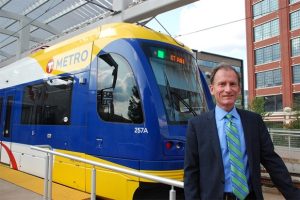 Mark Fuhrmann (executive responsible for expansion projects)
Between 2004 and 2018, Mark Fuhrmann served as Metro Transit’s deputy general manager where he oversaw the delivery of rail and BRT projects. The project directors all reported to him.
Fuhrmann has a bachelor’s and master’s degree in urban planning. He joined Metro Transit as an intern in 1981, and later moved to Washington, D.C. where he worked on new rail projects. In 1993, he returned to Metro Transit as CFO where he prepared the agency’s capital and operating budgets, and helped secure the agency’s first FTA Full Funding Grant Agreement.
- Metro Transit officials identified the following attributes about Fuhrmann that helped explain his success delivering projects:
- Dogged determination, intelligence and extraordinary professionalism.
- Persevered through the most challenging political conversations imaginable.
- Able to unravel complex engineering issues and identify the pros and cons of strategic choices for decision makers.
- Brilliant, prepared, thoughtful, determined and always respectful to his colleagues.
- Honest, straight shooting and unflappable. He was very calm under intense pressure because he always had his facts right. I was always amazed at how people on all sides of the transit issue might disagree with one of our conclusions but never the facts that Mark presented.
- Encyclopedic memory for events, dates and financial information.
- When he faced angry and often powerful people, he respected them, kept his head down, and pushed forward.
- He deliberately stayed out of the limelight. At public events and ribbon-cutting ceremonies, he would carefully stand behind office holders. If politicians insisted that Fuhrmann join them in the photo-op, he would politely oblige but on more than one occasion, he directed staff to crop him out of the frame.
In 2018, he retired from Metro Transit to take an associate vice president position at HDR. His words of wisdom to his staff before leaving were: “Communicate, collaborate, and coordinate with all the stakeholders – political, community, and staff.”
Fuhrmann left Metro Transit for a combination of reasons. He said, “I needed some fresh projects and the opportunity to learn more.” He also said he was burnt out after 14 years at Metro Transit, and the agency’s two major projects were not advancing as fast as he had hoped, due to delays in obtaining federal and local funding. Salary was not the primary factor in his decision. Metro Transit had obtained an exemption of its salary cap to pay him one of highest salaries in the state’s public sector. (The salary range for his replacement was advertised at $124,446 to $230,6352021.) He said, “What I like most about consulting is that I don’t have to be summoned in front of a firing squad of state legislators, who say ‘no way, never rail’.”
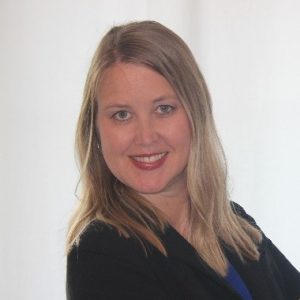 Christine Beckwith (first project director)
Christine Beckwith was the Gold Line’s project director between 2017 and 2021 reporting to the Deputy General Manager.
After receiving a bachelor’s degree in civil engineering, she worked at MnDOT for ten years, moving up from graduate engineer to senior engineer. She also earned an MBA while working for the agency. In 2008, she started at Metro Transit where she has worked on several BRT and light rail projects, rising from project controls manager to deputy project director and then project director.
In June 2022, she stepped down from directing the Gold Line to become project director for the Blue Line rail extension project.
Alicia Vap (project director since 2022)
Alicia Vap became the acting project director of the Gold Line project in June 2022 and then was appointed the permanent director a few months later.
She has a bachelor’s degree in political science and a master’s in urban planning. After graduation she worked as a transportation planner for more than 14 years. Between 2008 and 2020, she managed the design of stations and
maintenance facilities for two Metro Transit light rail projects and a BRT project. This involved overseeing design contracts and coordinating with internal and external stakeholders.
Vap said that her previous work on major projects prepared her for the project director position. She said, “I could see all the nuts and bolts” and it provided her with experience managing people, contracts, procurement processes, working with the FTA, testing, and scheduling.
Vap credits her success as project director to surrounding herself with experts and knowing when to ask for help. She said the work requires her to understand the project and how it fits in with the political landscape, funding, the Metro Transit organization, and numerous processes (including New Starts, procurement, legal, and contracts).
Morgan Abbott (deputy program manager)
Morgan Abbott, an engineer for Minnesota’s Washington County, is assigned full-time as deputy project director for the Gold Line. She has a civil engineering degree and has been an engineer in both the private and public sector since 2008. She started working for Washington County in 2018 and has been the project’s deputy since 2021. When asked who her boss is, Abbott responded that it is the project director not her supervisor at the county.
Abbott recognizes that serving as a deputy is one of the best ways to become prepared to serve as a project manager. She oversees the contract with the consultant who provides project management and environmental services, and she is also learning more about third party agreements, FTA procedures, communications, public outreach, tracking projects, document controls, and budgeting. She has been picking up skills from the consultants and the rest of the project team, especially from the project director and the construction manager. Abbott observed that one major difference in managing a large, rather than a small project, is the need to deal with powerful players including U.S. senators, local mayors, and the regional media.
In previous positions, Abbott had little experience with stakeholder engagement and coordination, such as working with communities on what a station would look like. She has learned about “the need to hold the line when they expect more. However, I do need more training about getting informed consent and buy-in.”
In Minnesota, counties take the lead on the initial planning of large transit projects and then help fund the construction. That is why Abbott, the deputy project director, is a Washington County employee assigned to the project. (Note that Ramsey County also provides funding, but it did not have any available staff to dedicate full-time to the team.)
Having a county employee as deputy has its pros and cons.
Abbott said, “Having the county part of the team gives the project team more credibility and trust.” This can be especially helpful if Metro Transit runs into problems and experiences delays or cost overruns. Beckwith said that giving the county such a meaningful role on the team, “makes the project more challenging, but better in the long run. If the counties are part of the team and helping to make decisions, when things go sideways, they are there to help solve problems.”
However, Fuhrmann has his misgivings. Although, Abbott’s role promotes conversation between the Metro Transit and the county, it does not necessarily help get a project done on time.
Steve Barrett (construction manager)
Steve Barrett, an engineer, is the construction manager for the Gold Line. He oversees construction activities and contracts, and coordinates work with the design team.
Barrett has a bachelor’s and master’s degree in civil engineering from the University of Minnesota. After graduating, he worked at MnDOT for 29 years, moving up from graduate engineer to hydraulic design engineer, project engineer, resident engineer, and then project manager. In 2021, he was hired by Metro Transit. The agency was familiar with the work that he had done on transit projects while working at MnDOT.
Attributes, Skills, and Experience of a Good Project Manager
Dastgir, Fuhrmann, and Beckwith identified the key attributes, skills, and experience that a project manager needs. Note that the term ‘project manager’ is used as a generic term here for the role that the ‘project director’ performs on the Gold Line.
Based on Dastgir’s experience at the FTA, he said project managers need the following:
- Ability to communicate in a timely manner with a wide range of stakeholders (from contractors to FTA officials.) Talking to the right people at the right time, he said, is the difference between fixing a problem sooner or faster.
- Knowing how to keep a project on schedule. A successful project manager completes a project on budget and on time.
- Technical skills to understand design elements.
- Experience with previous transit projects.
- Knows how to take advantages of opportunities.
- Works well under political pressure.
Fuhrmann provided an important insight for identifying skills, experience, and attributes because he recruited, hired, managed, and promoted numerous managers at Met Council. He said a successful project manager on a large transit project understands the following six elements:
- Fixed guideway / high capacity transit systems
- How all the pieces of a project fit together
- Environmental / NEPA
- Finances
- Contract delivery methods
- FTA New Starts
Fuhrmann said when he hires a project manager, he wants a seasoned professional, someone with more than five or six years of relevant experience. If he could find someone who meets all the above qualifications, “I’d hire them immediately. Those candidates, though, are few and far between.” He indicated that if he can find someone who understands many of those elements, he can “grow them into a full-fledged project manager who understands all the components, how they fit together, and how they are sequenced.”
Beckwith said a good project manager can help bring in a project on time and avoid many extra costs. The elements that she thinks are the most important are: –
- Most importantly, the ability to manage a team with a broad set of skills. She emphasized the importance of empowering the team’s members. “People will leave,” she said, “if they don’t feel empowered and have the ability to make decisions. You need to let people manage their own tasks, acknowledge when they have done good work and give them credit for good work.”
- Understanding contracts and the strategy behind them is critical because project managers need to negotiate and manage numerous contracts, including professional services (e.g., design), funding agreements (with counties and the FTA), and construction contracts. They need to understand ramifications to a project, the team and the agency. Some of this knowledge is hard to teach and can only come from experience, she said.
- Understand many different technical areas.
- Know when a project is in trouble. Her project controls background has been helpful managing schedule, procedures, contracts, and risk.
- Anticipate issues – looking far into future.
- Understand milestones and timelines.
- Know when to communicate to policy makers.
- Help the team understand how pieces fit together so they can work through issues, identify missing pieces, and make suggestions for improvements.
Need to Be an Engineer?
Eno asked Beckwith, Vap, Abbott, Barrett, and Dastgir whether a project manager needs to be an engineer.
The first project director, Beckwith, has an engineering background. She said, “If you’re a quick study, you don’t necessarily need to be an engineer. You need to understand technical issues, ask the right questions, and help solve problems. Other people can bring in other skill sets. I’ve seen some project managers who don’t understand technical issues and then make decisions without consulting others. They can end up agreeing to things that cause problems.”
Vap, the current director, has a planning, not an engineering, background. She has noticed, especially in the construction industry, how non-engineers are sometimes treated with less respect than male engineers. She said technical skills are important, but “I don’t need to know how many piles are needed to support a bridge. I look at my staff for that. I know enough to understand the project.”
Abbott, the deputy project director, said that even though Beckwith is an engineer, she brought many important non-engineering skills to the project. “Through their education, planners learn about selling projects and getting buy-in. Engineers don’t get that kind of education. We understand the process of design and construction. Engineers don’t learn about getting early buy-in, how to get funding, and how to get people to support a project.”
Barrett, an engineer who also worked for both Beckwith and Vap, had a similar answer to Abbott. He said, “I don’t know if it matters. Alicia [Vap] relies on the engineering team more. There are certain skill sets she may need to delegate. But, she has other experiences and skills that are important such as planning, funding, and coordinating with the FTA.”
Difference Between Managing Light Rail and BRT Projects
Since Metro Transit has delivered both light rail and BRT projects, Eno asked Fuhrmann, Abbott, and Beckwith whether the skills to manage them are different.
Emphasizing the importance of securing approvals from stakeholders, Fuhrmann said there is not much a difference. He said even if you think you have secured local funding, prepared the best environmental impact statement, and identified the ideal alignment, it doesn’t matter if the project manager can’t get the FTA to sign off on the environmental document and secure a consensus among local officials on the alignment.
Abbott said, “From what I’ve seen they are similar.” However, she noted that bus projects can be more flexible. “If you come across unstable soil, you can modify the design in the field, if necessary. And, while buses can operate in general traffic lanes; you can’t detour a train when there’s a problem.” Another difference is the need to conduct extensive testing before trains can go into service.
Beckwith has the most timely experience having moved over from directing the Gold Line BRT to directing the Blue Line light rail project. She said that officially, Metro Council thinks that light rail projects are more complicated which is why the project director for a light rail project gets paid about $25,000 more than the director of a BRT project. But, she thinks they are equally difficult to manage.
In some ways, though, managing a BRT project is even harder. She said, “rail projects are more expensive, and the teams are bigger. On BRT, you need to wear more hats because there are fewer people. Since budgets for consultants and staff have historically been based on a percentage of the total project cost, BRT projects typically have fewer professional services and staff. One of the bigger challenges on the Gold Line was keeping a smaller staff and not burning them out.”
Construction Manager and Managing Contractors
Barrett, Beckwith, and Abbott discussed the role of a construction manager and the challenges of managing contractors.
Barrett, the construction manager, said the skills needed to manage the construction component of a project are fundamentally the same as those needed to direct the overall project. However, he said the project director does have to focus more on the relationships with stakeholders and working with federal agencies, and be concerned about the requirements associated with existing funding sources, getting additional funding secured, obtaining permits, environmental documentation, and agreements.
Barrett said in the planning and design phases, there is more time to research and bring people in to help solve problems. During the construction phase, there is more urgency because “time is money.” He referred to the following skills and experience that are important for a good construction manager:
- Having good relationships with contractors.
- Being creative, finding solutions to problems, and thinking outside the box in realtime.
- Strong and wide background in engineering.
- Understanding how contracts work
- Understanding important roles and responsibilities
- Knowing when things will impact the critical path of the schedule. Part of that is understanding when a need is critical, and the agency needs to spend money quickly.
- A wide knowledge base dealing with every aspect of project.
Creative problem solving is an important component of construction management according to Barrett. One example he gave was how prior to going out to bid for a construction contract, Barrett reviewed designs and saw that the location of a proposed storm sewer trunk line would create numerous conflicts with utility lines. After he recommended moving the storm sewer to the other side of the roadway, the project needed to be redesigned. The change extended the design schedule, but made the project more constructible.
Another example was how during construction, asbestos was discovered at a pond. This was a time sensitive issue, and he had to bring the contractor and subcontractors together to determine the best course of action and draft a change order document. He said it is best to resolve these types of issues in a prompt manner.
When there is a problem, Barrett keeps the project director informed and listens to her comments and thoughts. But, construction managers are expected to solve most problems on their own.
Beckwith, the first project director, said projects need a seasoned construction manager with a technical background who knows how to manage projects. She explained, “It’s really fast paced, and not everyone is cut out for it.”
When asked whether it would be helpful for the construction manager to have experience working for a contractor, she said, “they may not fully understand quality management, paperwork and oversight from an owner’s perspective.” For example, someone who worked for a contractor might not necessarily think about writing down extensive details that could prove to be relevant later on if there are quality issues, for example, if concrete was poured in the rain. Documenting such details are important as they occur because site conditions could affect the material’s performance down the road.
Abbott said, “In my role as deputy, I’m not making decisions in trenches. That’s Steve [Barrett’s] job. He makes the calls while I monitor change orders and the budget, and communicate with stakeholders.” She said that there are always change orders that take place in design and environmental contracts. On the BRT project, change orders were needed when asbestos and unstable soil were found during construction. If change orders bring the project over budget, the team needs to go to back to elected officials and ask for more funding.
Beckwith said the hardest part of the construction manager’s job is not managing the construction, but dealing with contractors who are trying to maximize their profit. Since contractors are often selected based on low bids, sometimes they try to cut corners. The example of pouring concrete in the rain is one example. Sometimes a contractor will try to use materials that do not meet the contract specifications, if the inspector is not at the construction site. “You need to have enough people watching the work,” she said.
Beckwith said, “Some, not all, contractors will count on padding their profits with change orders. Depending on the contract, you may have to renegotiate something, but it’s harder to get a lower price after a contract is signed. I learned this from working on project after project, not from my engineering classes. I also learned a lot from seasoned inspectors and from observations.”
Barrett said, “You need a good relationship, but not blind faith.” He explained that you don’t want an adversarial relationship with someone you work with every day, but you need to verify their work and have good quality assurance program. You need to understand they are there to make money and that they are committed to meeting the contract requirements.
Barrett explained how maintaining a professional relationship and being a good partner is important because, quite often, the construction manager needs to ask contractors to perform work for the “good of the project.” He explained that “Metro Transit needs to pay contractors extra when they do work not outlined in the contract, but sometimes things are not always black and white. The language is not always crystal clear.” He gave the following example of how a productive relationship with a contractor helped the project.
“We had an upset homeowner. We had cleared trees near her home, but a tree on her property wasn’t on the plan. After the contractor was out of the area, she complained because she wanted her tree to come out, also. We met with her and then the contractor agreed to bring back his crew. We paid to remove it at the same ‘cost per tree’ as all the other ones. If we had an adversarial relationship, the contractor would have said he’s not going to remove it unless he gets additional money for mobilization plus a higher amount than the cost per tree he had initially bid. Because we have a good relationship and he knows I won’t make him do things on a whim, he won’t nickel and dime us. He just got it done.”
A productive relationship works both ways. Bartlett remembers a contractor had to close the shoulder of a highway lane while construction was underway. According to the contract, the contractor could shut down the shoulder for up to 30 days, but would incur a penalty for each additional day over that. Bartlett said, “They came to us early, telling us they would need to keep the shoulder closed more than 30 days. We realized there wouldn’t be a significant impact of having no shoulder, so we let them extend the closure. We could have charged them the penalty, but we had a productive conversation and we said we wouldn’t do that.”
These two instances he said were reflective of a good relationship not a one-for-one trade. It is similar he said, “to a healthy relationship with a spouse. They help each other achieve their goals.”
Recruiting and Retaining
Fuhrmann discussed their experience regarding recruiting and retaining experienced staff for major transit projects.
Starting in 1998, Mark Fuhrmann (the former deputy general manager) told potential hires and existing team members that approximately every four years, the agency would deliver and open new projects. When Metro Transit completed one project then the team would shift gears to the next project. This gave the staff some comfort that they could stay at Metro Transit for many years. However, due to changes in the legislature and funding shortfalls, the agency was not able to execute Fuhrmann’s schedule and some of the projects experienced a multi-year hiatus.
As the Blue Line was nearing completion in 2004, the staff started asking “what’s next?” Fuhrmann said he was honest about Metro Transit’s political and financial challenges. As a result, he said, “We had a great migration.” Many of the project staff moved to Phoenix whose light rail construction began in 2005 and opened in 2008. He said, “It was not ideal. We couldn’t keep them because they needed to find work while we waited for money.”
Fuhrmann noted how some engineers became deputy project managers and then project managers. He said that was how two of Metro Transit’s “very talented” project managers, Alicia Vap and Christine Beckwith, moved up. “Once they reach the penultimate, there’s not many places to go. I’m Exhibit #1. Once you reach a certain spot and don’t see an opportunity for advancement to General Manager or deputy General Manager then you might start looking outside Metro Transit.”
His perspective about holding onto talented project managers has probably evolved since becoming a consultant. Referring to Vap and Beckwith, he said, “Maybe they’ll want to spread their wings, like me in 2018. There’s a very small community of people delivering FTA-funded projects. If Chris and Alicia can share and help deliver projects that’s a good thing. Our passion is delivering projects that benefit communities. If they can do it, it’s a value to the transit industry.”
Beckwith said that one important reason why Metro Transit has been able to recruit and retain talented staff is because they pay well and offer better benefits compared to the region’s other government agencies and its private consulting firms.
She understood why her former boss, Mark Fuhrmann, moved on: “The work can be so exhausting and stressful, especially the politics.” One of the hardest parts, she explained, is managing the requests from the region’s counties and cities who have a great deal of power over the projects. “They might want to move a park-and-ride location or add a pedestrian bridge, but these types of requests can drive up costs.”
Beckwith left Metro Transit for a short time to work for a consulting firm. She talked about three benefits of coming back to Metro Transit. First, project managers in the public sector can make decisions while consultants can only offer suggestions. Second, public sector employees do not have to worry about their own billable hours or work on proposals on their own time. Third, at a public agency, there can be more flexibility and opportunity for work-life balance.
Referring to three key players who left Metro Council to work at HDR, she said, “I don’t think they left because they could get more money. Their projects were completed, their kids were grown, and they were ready to do something different.”
Vap said that different areas of the agency are having trouble keeping project managers. Some go to consulting firms, but money is only one reason why. She explained, “there are only so many projects at a transit agency.” Abbott has also noticed that finding qualified people has gotten much more challenging in the past few years.
Beckwith said, it has been challenging to hire all the people that are needed for the project, especially “because you can’t promise full-time employees that they will have work after the project is completed. There are no guarantees for anyone working on the project. It’s hard to find people when potential employees know the project may not even make it to construction. Because of this, Metro Transit has had to rely more on consultants than it otherwise would have.”
Barrett said he is supposed to be construction manager for a future Metro Transit project, although there is some uncertainty about its status. He said, “I’m not worried at this stage in my career.” Consultants have expressed in interest in hiring him, but he said he never talked to them seriously to find out how much they are offering. He has seen many of his peers go to consultants, but also quite a few go from consulting to Minnesota DOT.
Two major factors kept him at MnDOT and now Metro Transit. First is quality of life. He said, “In the public sector, you trade a little less money for stability and a better work-life balance.” He is also not interested in the pressure of having to meet a certain number of billable hours. The second is his roots. He grew up in Minnesota and takes enormous pride in all the transportation improvements he has made. After working on so many projects in the Twin Cities area, he knows how to deal with federal and state agencies as well as all the municipalities. “I know who to talk to and I know their concerns without even talking to them, but I still loop them in as appropriate.”
Abbott is not sure where her career will take her after the project is complete. If she decides to go back to her old position at the county, she would have to take a pay cut. Moving up to a project director has its rewards, but she realizes that would impact her work-life balance. Abbott said she would prefer staying in the public sector because consultants need to move where the projects are, and she would miss the agency coordination and partnership building that she does now. “Recruiters,” she said, “call me all the time.”
Role of Consultants
When Metro Transit first started putting together its project teams in the late 1990s and early 2000s, Fuhrmann said the state legislature and the counties (who were helping to pay for projects) wanted to minimize costs and maintain more local control by minimizing the number of consultants. In response, Fuhrmann created hybrid teams with Metro Transit staff managing the projects and consultants providing supplemental services.
Fuhrmann opened up project offices where staff and consultants shared one space. At least once a week, for about 90 minutes, representatives from all the disciplines on each project team would meet to discuss how to resolve issues. He said it helped the participants understand a broad perspective of project issues.
In recent years, he said agencies are having trouble finding qualified project managers to staff projects and they are not inclined to do one-time hiring. Instead, they are looking for consultants to design, engineer, manage, deliver, test, and commission projects –from start to finish.
Even though he now works at HDR, he warned of relying too much on consultants. “You don’t want your institutional knowledge getting flushed down the toilet. Metro Transit has done a really good job of building a base of knowledge with its own core team, and pulling in consultants for horsepower.” A good consultant, he noted, can help an agency create a foundation for institutionalizing their knowledge.
Leaving Metro Council has been a real eye-opener for him. He said, “many first-time project sponsors, don’t know what they don’t know.” He referred to the challenges of creating management plans, determining the alignment, completing the NEPA process, and getting a full-funding grant agreement. Getting a CIG grant, he said, is much more complicated than procuring buses or obtaining funds from the U.S. Department of Transportation’s RAISE and BUILD programs. “We try to educate them.” he said. “It’s not like building a park-and-ride lot.”
Training
Beckwith, Vap, and Fuhrmann discussed the topic of training programs to prepare staff and program managers.
Fuhrmann says that consultants have more robust training programs than transit agencies, including very specific course offerings in topics such as cost estimating and scheduling.
When Abbott worked in the private sector, her firm hired a consultant who led a threeday project management training course. In 2022, she took FTA/NTI’s three-day project management course.
Abbott said that both the consultant’s course and the NTI course discussed ways to manage projects to meet milestones and deliverables. The consultant’s course had one very important difference. It included topics designed to ensure that the firm made a profit on its work, including lessons on preparing proposals, managing overhead, and seeking reimbursement when work outside of the scope needs to be performed (change orders).
Vap was well-prepared and fortunate before taking on the project director’s role. She had taken a six-month project management program at Metro Transit, worked on two major Metro Transit transitway projects, and when she became acting director, she met with Beckwith (her predecessor), every week. Furthermore, unlike most other transit agencies, she has peers. “At Metro Transit, we have three CIG projects in the pipeline,” she said.
For Barrett’s first two years working at MnDOT, he was in a “graduate engineer” program where he rotated between departments. The program’s emphasis was on learning new technical skills and understanding who was responsible for various tasks. He later took a multi-day project management seminar that was designed specifically for MnDOT staff where he learned about how to take a project “from cradle to grave” as well as lessons that helped him improve his communications and organizational skills. During his career, MnDOT encouraged him to take classes, and he did so. Over time and on the job, he learned how to better prioritize work and deal with stressful situations. Today, as construction manager, he brings in experts to talk to his staff about specific topics on a weekly basis during the winter months.
Beckwith said that educating staff has been an important part of the Gold Line project because employees from the counties and MnDOT assigned to the project had never worked on a project like this one. Training is not always formalized, though. “If there’s a problem, we might refer to past examples and solutions say on the Orange line or the Blue line. We also have a big data base of lessons learned, such as how to manage contingency.”
At Metro Transit, Beckwith took courses associated with the Project Management Professional (PMP) certification program and she participated in the APTA (American Public Transportation Association) Leadership Program. She highly recommended APTA’s year-long program, praising the association’s relationship with the FTA and its ability to incorporate the most up-to-date information.
Beckwith recommended other sources of education for project managers starting with APTA conferences where attendees can learn about a wide range of topics such as light rail and the Buy America requirements. At the conferences, FTA’s executive leadership often provide updates on regulations, and hold question and answer sessions. “It’s a great way to learn about positions and plans that might not be in writing, yet.”
She also said that NTI has good courses on risk management, noise analysis, and ridership, as well as the project manager course. For those working on the planning and development side, she recommended MPact (formerly called Rail-Volution.)