
Profiles of Other Leaders (Project Managers and Project Executives)
This appendix profiles seven leaders of project management teams.
-
Henry Stopplecamp
-
Rick Clarke
-
Robert L. Lund
-
Zoe Robertson
-
Evelio Hernandez
-
Damian McShane
-
Bruce Podwal
Table of Contents
Leadership Profiles
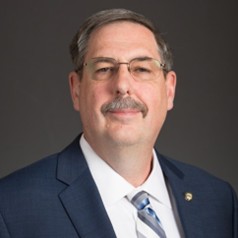 Eno interviewed Henry Stopplecamp when he was the assistant general manager of capital programs at the Regional Transportation District (RTD), a position he held for eight years. Stopplecamp’s predecessor as assistant general manager was Richard F. (Rick) Clarke.
RTD provides public transportation in the Denver metropolitan area. The agency opened its first light rail in 1994 and ten years later, the region’s voters approved a tax to fund the FasTracks program, which consists of 122 miles of new commuter rail and light rail, 18 miles of bus rapid transit, and 21,000 new parking spaces at rail and bus stations.
Stopplecamp obtained a bachelor’s and a master’s degree in civil engineering after serving in the U.S. Army for four years. After graduating, he worked in various roles for six years at BNSF Railway. He joined RTD in 2000 as a senior civil engineer and held several positions including senior manager of construction and chief engineer.
Stopplecamp was a member of the core group that developed the RTD’s FasTracks program and then a member of the senior leadership team that implemented it. He managed more than 350 RTD employees and consultants as assistant general manager.
When he retired in August 2023 after 23 years of service, he said with great pride, “I have been blessed to work on 10 major corridor and terminal projects from environmental through construction and into operations and maintenance along with another 3 light rail corridor projects from final design into operations.” He added, “It has been a privilege and a blessing to work with such talented and dedicated individuals.”
He told Eno that RTD has done “a fantastic job.” But, he admitted, “we could have done better.” There is always room for improvement. RTD had a dedicated staff that put their heart and soul into all the corridors. A couple areas that could have helped with staff retention and morale would have been additional training and competitive salaries.
Attracting and retaining
When asked about retaining project managers and experienced professionals, he said, “We don’t retain, unfortunately.” He succinctly explained, “We’re not paying and they’re not staying.” He added, “Without large scale projects, training, sufficient staff and competitive salaries, it is very hard to retain talented employees when the local private sector is making very nice offers.”
Stopplecamp said the agency, ideally, would promote from within. That can happen with large transit projects because they involve so many staff and the teams transition over many years. He has had engineers who were inspectors at the beginning of a project become the project manager by the time it had closed out. Stopplecamp is disappointed that RTD cannot guarantee individuals that they will be the next project manager, because the agency does not know what the next big project are, and it also needs to advertise all open positions.
Stopplecamp also noted due to the lack of large-scale projects, once project managers reach a certain level, there are fewer opportunities for promotion at the agency.
Salaries
Stopplecamp said, “the private sector is more lucrative. People with skillset developed during the FasTracks program get gobbled up by consultants. They can get a 50 percent jump in pay, if not more.” He said on all of his projects, he had to supplement his project teams with consultants, many of the senior project staff members (working for consultants) earned twice as much as RTD project employees. That made it harder to retain the agency employee until the end of a project.
RTD could match the salaries for young engineers, but not senior engineers and project managers. Referring to working for a consultant, Stopplecamp said, “I could go across street and get a $100,000 raise. But, I like what I’m doing.”
Stopplecamp stated that RTD had paid a consulting firm $500,000 per year for a project director. The director earned half of that amount which was more than the Assistant General Manager’s salary.
Stopplecamp said that RTD’s benefits (medical, dental, and time off) are “pretty good and competitive” with the consultant world. But not the base pay.
In 2019, RTD had approximately 2,850 employees. According to the Denver Business Journal, Stopplecamp was the fifth highest paid employee, earning $222,724. The highest paid were the general manager ($295,000), chief operating officer ($255,625), chief financial officer ($226,315), and general counsel ($225,514). Joe Christie, the project director for the Eagle P3 project was the 35th highest paid employee, earning $150,440. Stopplecamp noted that some transit agency employees with significant responsibilities operating trains and buses can resent when an agency pays relatively high salaries to project managers. That same level of resentment does not occur when a consultant is hired.
Stopplecamp said RTD’s salaries are lower than consultants because building major transit projects has typically not been the agency’s highest priority and it is hard to relate to folks with unique skillsets and demands different from the typical transit employees. The top priority, understandably, has been moving people, day in and day out. Many agency executives, especially those without a background in building large projects, have not understood the importance and challenge of finding someone with the skill sets needed to manage large transit projects.
Benefits of Working at Public Agency
He identified advantages of working at RTD: “You don’t have to look for another project, worry about work coming in, and you don’t have to travel.” He also said, “We expect 40 to 50 hours of work a week,” not 60 to 70 hours plus travel that are expected at many consulting firms.
Another downside of working for a consulting firm is the need to move for work, or losing a bid and then losing a job. Stopplecamp said if someone is looking for the “almighty dollar,” they should go to the consulting world. They should work for the agency, if they want to “own” a project, have a better quality of life, and much greater job stability.
He said that most of his project management team members have left for more money and promise of better things, but he did refer to two staffers who stayed because they “want to contribute to the community.”
Disadvantages of relying on consultants
Stopplecamp did say that there is a need to augment agency staff with consultants, but the must be a balancing act between core team members and support members. Stopplecamp said many agency officials do not recognize how hiring a consultant rather than staff impacts institutional knowledge. Keeping project information in-house is a “huge benefit to the organization,” he said. But, RTD’s leaders “don’t see it or pay for it.”
Long after a project is completed, those who managed a project (and are still working at RTD) do not have any official role related to operations and maintenance, but, Stopplecamp said, “people come back to you when there’s a problem.” The project managers have institutional knowledge and can work on a project their entire career. He said they’ll be asked what they did, why they did it, and “what was the intent?”
Another reason institutional knowledge is important is because an RTD employee will be able to offer first-hand knowledge about the past performance of consultants and contractors. That information is very valuable when the agency reviews bids on future projects.
He has had good and bad experiences with consultants and contractors. But consultants who have spoken on behalf of the agency and then leave their firm/project has given him “heartburn.” in the past. Also as noted above, he has had project managers and deputy project managers who were consultants, getting paid twice as much as the agency’s project lead. This has made it harder to retain the agency employee until the end of a project.
Stopplecamp said when agencies have trouble retaining employees or rely too much on consultants, it can hurt their ability to successfully close out projects, a process that can take several years after construction has been completed and trains are running. Before a contract is closed, all deliverables must meet the agency’s satisfaction. This includes providing spare parts, warranty documents, and proof of insurance. In addition, all disputes need to be resolved between the agency and its contractors as well as between the contractors and subcontractors. Some disputes can be complex and contentious; for example, a company that sued RTD in 2018 for $111 million and lost, is now appealing the court’s ruling.
Documenting lessons learned
Stopplecamp said, “No project, agency team, consultant or contracting teams is perfect. Getting into how the sausage is made can detract from the enjoyment of eating the sausage. But we all need to learn from mistakes and develop a method for sharing this information.”
RTD has shared its experience with the transportation industry by publishing “lessons learned” documents in implementing projects. For example, it described lessons it learned from its Eagle P3 Project and remaking Denver’s Union Station. In theory, these documents could be invaluable resources for project managers. Unfortunately, they have limited value.
Stopplecamp said that sharing lessons learned is a “nice concept”, but other agencies need to talk with individuals involved in a project to really understand those lessons and the impact on the project and agency.
Stopplecamp explained how the RTD, like all agencies, needs to be careful when it reviews and documents a company’s performance, because if the agency says that a firm did a “bad job,” it could be held liable and if it says the firm did a “good job” that could be taken to mean good in all areas, which might not be the case. He said, “The best way to gain insight on a project is by talking directly with the team and relating your needs and concerns.”
Someone who wished to remain anonymous told Eno that the lessons learned documents released by RTD were “worthless.” He revealed how the agency decided to “remove the warts.” because it did not want to air its “dirty laundry” and report that someone made a mistake because that could harm the credibility of employees, their supervisors, and the institution. A candid version of a lessons learned document would lead reporters, elected officials, and the general public to ask whether the agency took all the necessary steps and whether it was spending its money wisely. RTD did not even want to create an internal lessons learned document because “what if the local public radio station puts in an open records request?”
When Eno interviewed Stopplecamp, he revealed, “I don’t keep notes anymore; notes are discoverable, and the only official record should be meeting minutes or official correspondence.” He has learned that the hard way. The Colorado Open Records Act allows the public and consultants to obtain all or any project documents unless deemed privileged. His notes in the past have been used for and against RTD in court.
He gave an example of a conflict that the transit agency could have had with any third-party entity. If his notes indicated that he thought that the third party was correct and the RTD was not, Stopplecamp might be accused of undermining or not supporting the project team. On the other hand, if he wrote that the third party was wrong in his opinion, the consultant or contractor could claim that it should be relieved of that particular obligation. For instance, a disagreement could occur about who is responsible for gaining site access from a public street. A city could say it is the contractor’s obligation while the contractor says the inter-governmental agreement indicates it is the city’s responsibility. Stopplecamp said, “If I write down in my notes my understanding, one side can use it against RTD.”
What to look for in a project manager
Stopplecamp identified the following characteristics that he looks for in project managers:
- Engineering mindset. Someone who can look at a project, tear it apart, and put it back together.
- Logical thinking.
- Understanding of what it takes to make a project successful.
- Knowledge of content, schedule, budget, and funding. He said that you cannot let any of these things get out of control.
- Experience working on large scale projects
- Knowledge of agreements and grants (since a project can be funded with ten different funding sources, project managers need to know which elements of a project can be used by each source)
He said the agency is “Asking for a lot, expecting a lot, and not paying.”
Training
Stopplecamp said that RTD project managers basically learn from “trial and error” and most learning “is hands on.” RTD does not have a formal mentoring program.
He said, “unfortunately, project management is a hard skill to hone.” That’s why the consulting world hires the good ones “in a heartbeat.”
He expects engineers to have learned about scheduling and contracts in school. The Project Management Professional programs, he said, provides generic training, but the not all coursework is relevant to federal transit projects.
He also recommended not hiring someone who has only managed the construction of buildings and expect them to build a transit line. Someone with highway and FRA experience would be a better fit, he believes.
Change orders and project managers
Every large construction project faces some unexpected conditions or events that require change orders. When that happens, Stopplecamp explained how a good project manager, who understands the project from conception to grave, can save an agency money from private firms attempting to cover their mistakes.
An inexperienced project manager can be overpowered by a clever consultant team. Stopplecamp said, some firms have been known to submit low bids and then ask for one change order after another. Some private firms have more sophisticated staff than a public agency’s project team and are more willing to fight. They can take advantage of an agency that “doesn’t want to be dragged through the mud in the press.”
He described how some contractors have hired former agency staff who are adept at finding loopholes in contracts. For example, the specifications in a contract might stipulate that the rail should be 136 pounds per yard, but a drawing in the contract might indicate that industry standard rail should be used. A contractor could claim that 115 pounds is the standard in the transit industry and that the agency must pay an additional amount if the agency wants 136 pounds. This example highlights the importance of having well-qualified and experienced agency professionals preparing contract documents.
Mr. Stopplecamp generously offered to discuss any of the information above in more detail with anyone interested.
 Richard (Rick) F. Clarke was an Assistant General Manager of Capital Programs at the Denver RTD, responsible for all the FasTracks program, between 2009 and 2015.
He has a bachelor’s degree in economics and a master’s in engineering. Before moving to Denver, he worked on transportation projects in Germany, New York, Cleveland, Boston, Dallas, and Philadelphia. As a consultant, he learned about systems integration, project controls, budgeting and schedule – skills that are all essential for managing large projects. In 2000, he went to the RTD to manage the agency’s T-Rex project, a $1.7 billion program that combined freeway reconstruction and a light-rail extension project.
When the CEO of RTD, Phil Washington, left Denver to become the CEO of LA Metro in 2015, Clarke followed him a few months later to manage LA Metro’s engineering and construction department. One of the reasons that Clarke left was because RTD was completing its large mega-projects on the FasTracks program and did not have a pipeline of similar size projects. He noted how the size and complexity of mega-projects provide unique challenges and opportunities in a professional career.
Recruiting and retention
When Clarke started at RTD, he saw that the agency had well-qualified experienced professionals who understood large rail projects and knew the local area. He used them as the core of his team. Maintaining “a core of experienced project management personnel” with “technical capacity” can help improve the quality and reduce the cost of projects, he said.
However, because funding at RTD was intermittent, he had trouble holding onto his team. Clarke also found it hard to recruit for project managers because the agency only guaranteed them a position for the life of a project. “Go-getters wouldn’t worry about it. They’d say I want to work on it and get experience. There were many qualified people who wanted to work on the large projects and would have been great, but they had concerns regarding what would happen to their job when the project ended.”
He said, “it’ very hard to build a consistent pipeline of projects that can keep key core staff.” That is why RTD and LA Metro both hire consultants.
When recruiting potential project managers, Clarke could point out he had moved from Dallas to manage a Denver project. He would tell potential employees, “It’s the opportunity of a lifetime” and when the project is complete, “you may have to move, but there won’t be a lack of interest in hiring you.”
He said, “I felt terrible. People give so much to the project and when it ends, they’re told we don’t need you anymore.” Luckily, he knew, there is a great demand for their skills, and they can command a nice salary. In fact, he noted that many have gone on to successful careers at agencies and consultants.
Clarke was not the only project manager who went to California from Denver. He said that LA Metro was sometimes referred to as “Denver West.” Nadine Lee, an RTD project manager, went to LA Metro in 2016. She now heads the Dallas transit agency. James Starling left his position as RTD project manager in 2014 to work at Jacobs in San Diego on the Mid-Coast Light Rail project. And, Joe Christie, who was an RTD project director went to a Los Angeles firm in 2021.
Institutional knowledge
Clarke explained why retaining staff who hold institutional knowledge is important. An agency can build projects using similar design criteria and standards, but some information is only in a person’s head. For instance, an important part of managing a project is working with cities and jurisdictions. In Los Angeles, LA Metro often had a challenging relationship with the city. When an issue came up, he sought out agency staff who understood the issues and history.
He noted that compared to outside consultants, “Many transit agency professionals have built long term relationships with local jurisdictions that can be leveraged during the project. Also, local jurisdictions usually prefer to work with agency staff compared to consultants or contractors. In addition, agency personnel are embedded in the culture and relationships within the agency including key interfaces with the Operations Department – the ultimate customer.”
He said that an agency needs consultants, but “it’s important that the project manager be an agency person. Preferably someone local. An agency person makes better decisions in the long-term interest of the agency.”
Training
Most program managers are engineers, Clarke said, who don’t learn in engineering school how to present to boards, how to manage a budget, and the financial aspects of managing projects. Although Clarke revealed that he learned from the “school of hard knocks,” he does not recommend that for others.
When Clarke went to LA Metro, he had a program manager, Sameh Ghaly, who headed all the megaprojects. Ghaly emphasized the need to train the project management team, and he enrolled several staff members into a Harvard Business School program. Most of the LA Metro project managers went to training programs including Eno’s program. Phil Washington, LA’s Metro’s CEO, was very supportive of these efforts.
Clarke said, “Most people are like me” and say they “don’t have time for training. Most of us think about putting out the fire of the day and the hour.” Clarke credits Ghaly for taking the initiative on training.
Clarke identified two major problems with training. First, “a lot of training at the agency level is not directly relevant for high level people.” Second, “staff often don’t take it. It’s easy to put it off.”
Lessons learned from projects are also important to provide staff with knowledge of actual project experiences – both good and bad.
Planning to engineering, construction and operations
Clarke explained how the transition from planning to construction and then operations and maintenance can be problematic for managing projects.
Sometimes, the engineers felt that planners had passed down problems that could have been resolved earlier. However, the engineers often were not paying attention to issues raised in the planning process because the projects seemed so far down the road. The operators had their own concerns with coordination. They would say that engineers were building projects in an “expedient way that won’t be good for long-term operations.”
Clarke tried to address this problem by having both engineering and planning project managers work together. The engineering project manager would get involved in the planning phase and then eventually take over project.
He said, “It’s a healthy tension. The way to address it is by making sure departments are involved in every stage. Sometimes it’s hard. It takes resources including assigning qualified engineers with strong skill sets in design and construction to the planning phase. Likewise, operations personnel with the pressures of daily operations need to be assigned away from that area to planning and design.”
Project Managers and their CEOs
Clarke said that the success of project managers can depend upon whether they have a good relationship with the CEO. It can be helpful if the CEO has a background that included experience with large construction projects.
CEOs who have a background only in operations often have a different perspective than those who have been steeped in construction. Clarke said, “operators expect everything to happen the same way every day – that’ s a mark of success. In construction, every day is different, and unexpected things happen.”
When agency heads do not understand construction issues and do not realize how many unknowns are associated with large transit projects, they can lose patience with project managers when an unanticipated problem occurred. Clarke said Phil Washington gave him the support that he needed. Washington was “not a construction person, but he understood and embraced it. He came to most partnering meetings with construction executives, and he could deal with the heads of construction. He could talk with a mayor about construction issues.”
Sometimes, Clarke needed Phil Washington to meet the president of a construction company or a mayor behind closed doors to resolve a problem. For example, when RTD was building a rail line to the airport, the line was on airport property for eight miles. The city wanted RTD to build additional grade separation and track for a potential second station on airport property. After Clarke told city officials that this extra cost was not in his project’s budget, he was told that RTD could not have the airport property. Ultimately, Washington and the mayor worked out a process that kept the project moving.
Relationship with contractors
Clarke said, “Good projects have partnering. Usually, the president and vice president of construction companies are involved. I needed equal representation from our side. Phil [Washington] knew contractors on a first name basis.” He was able to work things about when contractors had big claims.
Clarke said, “I felt strongly we had to be fair with contractors. Not give away the store. Good relationships lead to better competition and better prices.” Sometimes, he faced internal criticism when he agreed to change orders that accommodated contractors’ requests. He explained, “If something is explicit in the contract, you can’t give in. Sometimes contracts don’t cover everything, though.” He cited an example of additional work that was needed after an unexpected problem occurred. Clarke agreed to pay for half the costs, after the agency and contractor could not agree on who was to blame.
He noted how the contractors he worked with “would do things at risk because they knew we’d be fair to them. That’s why it’s so important to have good terms with contractors.”
Attributes of good project managers
Clarke identified the attributes and skills he has sought when hiring project managers.
The number one trait, he said, is someone who can be a good decision maker. Project managers need to know how to make decisions. Some of them, he said, are afraid to do so.
He explained how project managers often have to make decisions quickly and stand by them. In construction, project managers often don’t have much time. For example, when a concrete mixer is on the way to the construction site, and the project team is still not sure of what type of wall should be built or the limits of where the wall would be built, you can’t say “form a study committee.” That is why, Clarke looks for the ability of a potential project manager to “make a decision, explain it, and move on.”
Project managers, he said, “need do lots of things.” They need technical skills as a base, but that “is just one part of the job.” A good project manager needs to know how to hire good people and trust them. They also have to be good communicators and understand the political world. “When they deal with city council members and county commissioners, they can’t give just technical jargon.”
Clarke described how project managers might need different skills depending upon the type of contract. For example, managers of public-private partnership projects need to be more aware of finances. Financial institutions that are paying for a portion of a project might have a team of sophisticated legal and technical advisors who are involved. Also, construction contract specifications are usually not as detailed in such partnerships, so certain technical skills might not be as critical. However, on a complex design-bid-build project where the owner takes a more prominent role, the technical skills are critical.
Robert Lund retired from Philadelphia’s Southeastern Pennsylvania Transportation Authority (SEPTA) in December 2021.
Between 2012 and 2019, he was SEPTA’s assistant general manager for engineering, maintenance, and construction – a department with over 1,500 employees. Although SEPTA has not built any transit megaprojects in decades, it is the fifth largest transit operator in the U.S. with an annual capital budget of approximately $1 billion. Lund was promoted in 2020 to be SEPTA’s deputy general manager, responsible forall operations, infrastructure, revenue and non-revenue vehicles, real estate, and capital programs. He retired on December 31, 2021.
Lund’s background includes approximately 23 years working in the utility industry. After receiving his bachelor’s and master’s degrees in civil engineering, he worked at an engineering consulting firm and then the New York New York Power Authority.
He moved from utility design into project management / construction management because “the opportunities for advancement were there and I was tired of crunching numbers.” He learned how to manage projects by “doing it for many years.” He described how his field experience was a valuable way to learn about construction. For two years, he provided technical engineering support for construction of a high voltage transmission line through the Catskill Mountains to the New York City area. He also managed utility construction projects; first one-at-a time, and then multiple projects, simultaneously.
SEPTA’s chief engineer who hired Lund in 2001, understood the commonalities between utilities and transit. They both involve linear projects on a right-of-way many miles long. They both have facilities (e.g., generating plants, shops, yards). They are both customer-focused and involve taxpayer money. Providing a utility service is also similar to operating trains because any delays and outages can have a major impact to customers.
Lund said, “I could have made higher salaries in the private sector, but I liked being able to do something for the public.” He did not seek out the limelight. “One of things I liked best was not to be in the public view. If I did everything right, the public wouldn’t see it. No one thinks about bridges or trains or power. They only think about it when the train or power isn’t there.”
Attracting and retaining: the salary differential
According to Lund, SEPTA’s “salary scale is not very attractive.” He took a significant pay cut when he started at SEPTA in 2001. He had personal reasons that made it worthwhile to move to Philadelphia, and he liked the challenges available at SEPTA.
For entry level engineers, the salary differential between consultants and SEPTA is approximately 5 to 10 percent, Lund said. At the higher levels, the difference is much more pronounced, approximately $60,000 to $70,000 per year. A project manager earns about $100,000 at SEPTA, but about $160,000 as a consultant in the Philadelphia area. He did note that SEPTA paid better than the City of Philadelphia or the state’s transportation department.
He has noticed that “young people, today, have a different mindset” than previous generations because they are not thinking about a job as a lifetime career at an organization. Potential employees are also not necessarily looking at benefits. “One of the key things SEPTA offered was a defined pension plan. But, younger candidates are just looking at how much money I’m putting into my pocket.”
Lund was never very successful at SEPTA hiring experienced managers from the outside because the pay scales were not attractive. The exceptions occurred when someone was particularly attracted by public service. The agency had better success hiring individuals directly out of school. “We could be competitive at the entry level. We offered opportunities of design and field work, and young engineers wanted field work. They didn’t want to just do calculating and drawing all day.” Lund said that SEPTA gave young people “opportunities to learn.”
Lund admitted, “If we could hire and keep for someone for four years, we were probably lucky. They would get experience, their PE [professional engineers] license. And jump.”
In 2022, he took a position as principal program manager at the firm, Gannett Fleming. He noted how his supervisor and the person who his supervisor reports to were both hired by SEPTA. They left after approximately five or six years to work for consultants. Now, they are working on SEPTA projects as consultants.
Training
Early in Lund’s career, he took continuing education courses relating to scheduling, and technical fields such electrical inspection, electrical wiring, and fire protection systems. He also learned about contracting. “I had to know documents inside and out better than contractors.” Lund also took multi-day courses to become a certified code enforcement officer so that he could understood the permitting process and building codes.
Because he came from the design side, he sought out construction management experience so he could become a more effective project and program manager. Managing a project involves taking a concept through design to construction and closeout, while construction managers are responsible for only one phase of the project.
At SEPTA, Lund started a rotational training program where young engineers are rotated to different department so they could get experience in various fields such as design, analyzing data from track monitoring systems, and managing projects. After the engineers complete their training programs, they can go back to the department where they were hired, or they could go to another group. The department heads, he said, “didn’t necessarily like it because they were losing productivity for a year. But it was a way to keep the young engineers and develop talent.”
Lund said that SEPTA does not have “a true project management program.” He noted, “That’s much needed in the industry.” Project managers and engineers learn most of their skills from hands-on work experience rather than from any formal training. Sometimes, he said, “they learned to do things the wrong way, if they’re learning from someone who is not doing it well.”
Several schools in the Philadelphia area offer graduate and certificate programs in project management and construction management. For example, SEPTA has paid for engineers to pursue a master’s in construction management at Drexel University.
Lund said that training is “supposed to be” a part of every employee’s annual performance review. Each employee is also supposed to have a development plan that helps employees identify ways they can fulfill their career goals.
Skills and attributes of project managers
Lund identified the following skills and attributes that he has looked for when hiring project managers. He noted that these measures are hard to judge in an interview.
He looks for individuals who are flexible and think outside the box when problems occur. They need to know how to weigh the pros and cons of various options, and not to be stuck in always doing things the way they have been done before. Lund had an important caveat to the concept of thinking outside the box. He noted how the project manager needs to follow rules and procedures.
He gave an example of thinking outside the box. SEPTA recently completed a 3.5-mile long rail restoration project to a station in Middletown, Pennsylvania. Before the station had closed in the 1980s, it was called the Wawa Station (it is located near the convenience store’s headquarters.) When SEPTA started actively thinking about naming rights, Wawa did not seem very interested. To get their attention, Lund changed the station name on the drawings to Middletown. After Wawa agreed to pay $5.4 million for ten years of naming rights, the new Wawa Station officially opened in 2022.
Before selecting a project manager, Lund would identify the skill set need to manage it. Then, he said, “reality sets in and you look to see who you have on the bench that will actually be available. You’re not necessarily going to hire someone from outside the organization because of staffing constraints. You have to go through and see who’s on the bench that I could pull off a job and move. They might not have the exact skill set, but they are the closest. That’s part of the reality. There’s just so many heads. Even if you could find someone, maybe you can’t because of money. It’s a long-term commitment to bring in someone.”
Institutional knowledge
Lund explained why he would have preferred hiring more permanent employees rather than consultants. “Permanent employees are more invested in the organization and the project. There’s a different mindset than when you’re hired and gone, versus you’re the owner and I’m going to be with SEPTA for a long time and I’ll have to deal with it forever.”
He also said that permanent employees have a different perspective on how something will impact riders. “Consultants will primarily think about how something is best for construction, and staying on-time and on-budget. But, if I lose riders in the long-term that’s not the best thing.” He also noted that employees have a better understanding of the operating rules, how to schedule trains and outages, and how to accommodate impacted riders and neighbors. Referring to SEPTA’s customers, “we have to live with them forever.”
Background
Zoe Robertson left SEPTA in 2022 where she had been the senior director responsible for the capital program’s project controls, quality assurance, and quality control. Robertson has an urban studies and urban planning background.
Hiring and retaining
Robertson said SEPTA has had trouble in the past few years attracting engineers just coming out of school. She thinks the “younger generation does not fully appreciate the value of health care benefits and pension” provided by the public sector.
She described the difference between salaries offered by SEPTA and consultants in the Philadelphia region. An entry-level engineer can earn approximately $80,000 to $100,000 at a consulting firm, but only about $60,000 at SEPTA. Private firms are willing to pay construction schedulers with one or two years of experience approximately $130,000, which is about $40,000 to $50,000 more than at SEPTA.
SEPTA had more trouble recruiting when the Covid-19 pandemic began in March 2020 and Robertson remembered that it got “really bad” after the Infrastructure Investment and Jobs Act was signed in November 2021. There was a “mass exodus” of staff — one mile down Market Street — from SEPTA’s offices to Amtrak’s Philadelphia office. Amtrak went on a big hiring spree and SEPTA could not match Amtrak’s salaries.
Although SEPTA had expected a massive wave of retirement, the pace accelerated during Covid, and the agency had trouble finding qualified people, either internally or externally, to take on the jobs of retirees. Robertson referred to a brain drain that was most pronounced by a gap in the number of mid-career professionals who have 15 to 20 years of experience.
Retaining: Challenges in the Public Sector
Robertson, who went to work at Gannett Fleming in 2022, said that her work at SEPTA was much more stressful than is at the consulting firm. She cited SEPTA’s responsibility to provide daily transit services and how “Each day 750,000 riders depend on SEPTA to get to their jobs, medical services, family, etc. Even employees that worked in the office, like me, felt the responsibility of working at a place that provides the essential service of moving people and has employees on the front lines.”
People at SEPTA “really cared and were committed,” she said, and the sense of responsibility was part of SEPTA’s culture. “The whole building had that mentality.”
Training
Robertson remembered SEPTA officials talking about the need for more training “ad nauseum.” They knew training was important, but sometimes courses were not offered at convenient times, and “when you’re short-staffed, there are no spare bodies to do the training.”
DART is now transitioning from an agency that built new rail lines to one that focuses on maintaining its assets. One of DART’s last major projects was an extension of platforms at 28 light rail stations to accommodate trains with three cars.
Background
Hernandez has a bachelor’s degree in mechanical engineering and a professional engineering license.
He took advantage of a unique opportunity to learn about DART’s equipment and systems. Early in his professional career, he worked at GEC, a firm with a contract to help DART staff up its operations, maintenance, and engineering groups as it was opening new rail lines. For several years, Hernandez learned from the GEC team, which consisted of many seasoned professionals who had been working all across the country on light rail projects (including signals, communications, and power).
As DART was hiring maintainers for its new systems and vehicles, the agency’s contractors provided the new staff with training program. Hernandez said, “I sat down in those training classes. I didn’t realize how fortunate I was.”
He later became a project manager at DART before getting promoted to assistant vice president. In 2012, he left DART to take a position at a private firm, the Shaw Group, working on delivering projects in Florida, Georgia and Texas.
He explained why he made the move. “Since DART delivered good projects and we participated in national industry forums, people got to know me. Shaw Group called me and said you could work out of Dallas. I said OK. It was hard to leave DART, but I couldn’t turn it down. They offered me $50,000 more per year, plus a $30,000 signing bonus and a $20,000 retention payment.”
After an organizational merger, his unit at Shaw was disbanded, so Hernandez got in touch with his old friends at DART who offered him a position. Although his wife is retired, he has no plans to do so in the foreseeable future. About his work, he said, “I’m fortunate and I love it.”
Training
One way that Hernandez stays informed of technical issues is by participating in APTA’s Streetcar Committee. “We learn from each other,” he said. Although DART is bringing in new people, equipment, tools, and implementing new procedures, “we don’t do a lot of training,” Hernandez said.
DART only has a few project managers. It relies upon consultants who help oversee projects and undertake project controls and systems integration. He has learned project management skills (such as scheduling and cost estimating) by experience and by watching how his consultants do so.
His department has a binder called “The Playbook” that provides information on how to manage projects, but it is not a formalized document.
Recruiting
In the summer of 2022, DART posted a position in Hernandez’s department for a project manager IV (the highest level for project managers at DART). The pay was approximately $125,000 and the new hire would manage systems engineering and construction contracts relating to vehicles, signals, communication, fare collection, traction power design, and construction contracts and projects.
DART has a standard job description that Hernandez modifies as appropriate. The job posting identified the following minimum knowledge, skills, and abilities required:
- Bachelor’s degree from an accredited college or university in Civil Engineering, Mechanical Engineering, Construction Management, or related field.
- Eight years of progressively responsible experience managing engineering and/or construction projects and contracts, including overseeing the work of consultants. Transit experience is preferred.
- Registration as a Professional Engineer or Architect in the State of Texas, Project Management Professional Certification, or Certified Construction Manager is preferred.
- Working knowledge of federal, state, and local laws and regulations governing engineering and construction contracts; overseeing and organizing the work of others; systems, techniques, principles, materials, and equipment to be used, as well as high levels of proficiency in performing complex and challenging professional and technical work such as managing construction contracts, directing staff, and negotiating disputes. Excellent written and oral communication skills to effectively communicate with all levels, both inside and outside DART.
- High-level analytical and creative skills to find solutions to complex and technical problems.
- Ability to be dedicated to meeting the expectations and requirements of internal and external customers.
- Ability to provide challenging and stretching tasks and assignments to direct reports; supports equal and fair treatment and opportunity for all; cooperates with the developmental system in the organization.
- Ability to settle disputes fairly; can find common ground and cooperate with minimum noise.
- Ability to blend people into teams when needed; creates strong morale and spirit in their team; shares wins and successes; defines success in the whole team.
- Ability to scope out the length and difficulty of tasks and projects and measure performance against goals.
- Ability to use rigorous logic and methods to solve complex problems with practical solutions.
- Ability to figure out the processes necessary to accomplish tasks; facilitates effective brainstorming and builds consensus among team members; orchestrates multiple activities at once to achieve a goal; uses resources effectively and efficiently.
Hiring someone is challenging, Hernandez admitted, when you are “looking for someone who has 12 to 15 years of experience in transit design and construction. Some may have design; some may have construction. Some have highway experience, but not transit. The real challenge is some of these people come from the private side and our compensation isn’t the same.” He added, “If we posted $100,000 and they want $150,000 or more, there’s just so much we can offer.”
Given his own experience, he appreciates the benefits of the public sector. “In the consulting world, if they don’t have a job, you have to move on, or they let you go.”
 Damian McShane has had several positions at the Port Authority of New York and New Jersey including program manager, senior program manager, and program director. He is currently the assistant director for PATH Capital Programs at the Port Authority of New York and New Jersey.
McShane leads a department with 25 employees who are responsible for PATH’s capital programs. PATH is the heavy rail system that connects Manhattan with the New Jersey cities of Jersey City, Hoboken and Newark.
McShane said “I cut my teeth” working on the rebuilding of the World Trade Center. “That was the ultimate training ground for project managers in the agency. As that organization disbanded, we created leaders in the agency.”
He said the best place to learn how to manage a major transit is by working in a pressure situation with measurable deliverables where the project team has support staff for project controls, scheduling and finances. “It’s a recipe for disaster without that support.”
He was hired for his current position because of his World Trade Center experience. They “wanted me to duplicate it on a small scale.” He had a vision of what he wanted to achieve regarding resources and breaking down silos between departments. Everything is resource driven, he said, from gaining access to tracks for construction (the PATH provides 24 /7 service) to having flag people protect contractors working on the railroad’s right of way.
Recruiting and attributes seeking in project manager
When McShane first began identifying the needs of his department, he realized the importance of having project managers who were “politically astute.” He gave this example of why it can be so important.
“Before we could shut down PATH’s World Trade Center service for construction work, we needed to make sure that we vetted everything that we could dream of — looking at outage times and durations, every service option, and productivity under different scenarios. Ultimately, we came up with alternative service plans. We worked with our government relations staff and made presentations to senior level management at the Port Authority, and to Hoboken City Hall and NYC’s community boards. We told them what our plan was. We were responsible for articulating the need, strategy, and alternatives, and why this was in everyone’s best interest. We worked closely with others to identify alternative service plans and we came up with a program for expanding ferry service.”
Like every other agency interviewed, McShane said he’s “having some problems” hiring qualified and experience project managers. That is why he has been trying to bring in employees from other parts of the Port Authority, including operations staff, and trying to develop them into effective project managers.
McShane said finding candidates with appropriate education and technical skills is not a problem. “The most difficult thing to find in a candidate is someone who can make decisions under pressure. People try to avoid making decisions. Compounding the problem is conflict avoidance.” Finding people with communication skills is also very important to McShane.
He looks for people who can come in and are “willing to drive a project. Confronting problems is a challenge” for many people. McShane talked about he has worked with some great engineers who are not good project managers. They could design a complex structure, but not necessarily solve a problem.
Decision-making and communication skills are important because of the scrutiny that accompanies every decision. Identifying the most appropriate solutions requires communicating with other people and incorporating their input. Project managers need to evaluate options and articulate the best course of action, and they must run potential solutions and recommendations through several layers of management.
The ability to make decisions in a prompt manner is also critically important because a substantial amount of PATH construction work is scheduled for nights and weekends, so that the agency can minimize service outages to its customers. Decisions must be made without having to consult McShane and other senior officials. For example, if an overnight construction crew does not have all the equipment and people that they expected or a sudden downpour occurs, the project manager must quickly decide whether work should proceed or whether it should be modified or rescheduled. That places a great deal of responsibility on the project manager.
When interviewing candidates, McShane drills down in to understand how they have reacted to situations and addressed problems in their careers. That helps him determine if they are capable of making decisions. He gave an example of someone who said he was responsible for building a bridge. McShane would ask detailed questions about using CAD, drafting design documents, interacting with the design team, consulting with contractors, and identifying shortfalls.
Retaining
Similar to SEPTA’s experience, McShane’s department has recently lost some experienced project managers to Amtrak. “Retaining is a problem,” he said. He has noticed that “younger people don’t seem to be as patient. We train people, give them lots of responsibility. We provide them support and expose them. And, then they run off.” He has noticed that the contractors and engineering firms he works with are also having trouble hiring sufficient qualified staff.
In recent years, the Port Authority has relied more on outside firms for design. Since the agency is no longer conducting its own cutting-edge engineering, the work is less appealing. The agency’s engineers are spending less time designing and more time managing contracts.
McShane has seen how some people can burn out from the pressures of managing large projects. Meanwhile, other individuals can become addicted to that pressure and relish working in an ever-changing, intense environment. Teams, he said, need some people who are happy with a slow day at work.
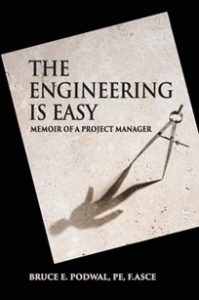 Over a six-decade career, Bruce Podwal managed major transportation projects across the globe including in Guam, Hong Kong, Houston, New York, and Turkey. He served on the board of directors and was president of several subsidiaries at Parsons Brinckerhoff, a 12,000 person engineering firm. Podwal has both a bachelor’s and master’s degree in engineering.
Early in his career, Podwal found most engineering tasks easy, and he presumed that managing engineering projects would be simple. However, he initially failed to grasp that management skills do not necessarily flow from technical competence. He learned the hard way about the challenges of managing and leading a team to a successful project completion.
Podwal explained the following:
Difference between a small project and a very large one
- Complexity is proportional to size; greater size means greater complexity. Continuous support and training are required to make the transition from managing small to managing large projects.
- Managing a very large project requires leadership, day-to-day guidance, and control of a complex array of interrelated projects, phases, and activities.
- The heads of very large projects have to trust their deputies and associates to share the management burden. They cannot micromanage. They must delegate so people know they are trusted, and so the managers can get their work done.
Skills of a good project manager
- Project managers need discipline, calm, and restraint.
- Project managers need to be good problem solvers who can envision options to get to desired endpoints, evaluate advantages and disadvantages of each option, and confidently move forward with the option that makes the most sense.
- Much of the science of project management is a list of dos and don’ts that one has to be rigorous about following. The art of project management is knowing what to do in the gray areas – this type of knowledge often can be gained only through the experience of making mistakes and observing the mistakes of those around you.
- It is difficult for individuals who are not engineers to manage a pure engineering project. They may not get the respect of engineers, if they cannot review the work that will be done. But, it is not as important to be an engineer, when a project is in the planning phases, or it involves extensive interaction with elected officials and the general public.
Peer Reviews
- He highly recommends that project managers review other projects, periodically.
- Podwal was frequently asked to review someone else’s project. The reviews helped him identify things that he should be doing on his own projects, and made him realize when he had been falling into bad habits.
- He has found that performing a peer review can help the reviewer as much as the reviewed.
Project Management one-liners
The following are some of the one-liners that Podwal liked to say, when he saw someone (or himself) making a mistake.
- Good project managers learn from their mistakes; excellent project managers also learn from the mistakes of others.
- Cost + schedule + quality = a constant. (It’s usually wishful thinking to expect something to be cheap, fast, and good.)
- Building a cathedral. (Schedule monthly meetings of all staff so they can see how their effort is an important part of a major undertaking).
- Give credit, take blame.
- Criticize the action not the person.
- The engineering is easy. (Never underestimate the amount of effort require to do the administration and management of a project.)
- Govern by schedule, and costs usually come within budget.
- If it isn’t in writing, it doesn’t exist. (The best minutes are prepared and distributed right after a meeting ends, when facts and nuances are still in everyone’s minds.)
- Read your contract from cover to cover (including every attachment, appendix, and reference document), at least once a month.
There is no one-size fits all for a project organization structure.